Oct Back to list
Cast Iron Cookware Manufacturer Thermal Dynamics and Manufacturing Specifications
Selecting the right cookware involves more than just choosing a brand; it requires understanding the thermal dynamics and material longevity that impact every meal. Cast iron remains a cornerstone of professional and home kitchens due to its unmatched heat retention and durability.
The shift toward healthier, chemical-free cooking surfaces has renewed interest in traditional metallurgy. Modern procurement now focuses on the intersection of traditional seasoning techniques and precision engineering to ensure consistent heat distribution across various cooking surfaces, from induction to open flames.
Whether sourcing for a commercial kitchen or retail distribution, partnering with an experienced cast iron cookware manufacturer ensures that the products meet rigorous food safety standards while maintaining the timeless performance of iron.
Metallurgy and Thermal Conductivity

Cast iron is prized for its high thermal mass, meaning it can absorb and hold a significant amount of heat energy. This property prevents the "temperature drop" that often occurs when cold food is added to a pan, a critical factor for achieving a perfect sear on proteins.
The manufacturing process focuses on controlling the carbon content to balance durability with heat distribution. By utilizing advanced injection molding and smelting techniques, manufacturers can reduce internal porosity, which leads to a more stable cooking surface and improved resistance to warping.
Engineering the Non-Stick Patina
Unlike synthetic non-stick coatings that degrade over time, cast iron develops a natural polymerization layer known as seasoning. This occurs when fats are heated beyond their smoke point, bonding to the iron surface to create a hard, slick barrier that is both food-safe and environmentally friendly.
A professional seasoning process involves applying high-smoke-point oils—such as avocado or grapeseed oil—and baking the cookware at specific temperatures (typically around 375°F). This process is not merely a coating but a chemical transformation that embeds the oil into the metal's pores.
The unique advantage of this natural patina is its regenerative nature; the more the cookware is used and maintained, the more non-stick it becomes. This eliminates the need for frequent replacement of pans, contrasting sharply with the disposable nature of PTFE-coated cookware.
The Role of Bottom Thickness in Heat Locking
The geometry of the pan's base significantly affects thermal efficiency. A thickened bottom acts as a heat reservoir, "locking" in the temperature and ensuring that heat is distributed evenly across the entire cooking surface, regardless of the heat source's hotspots.
Thick-base construction minimizes thermal fluctuation, allowing for precise temperature control which is essential for delicate tasks like simmering in a Cast Iron Saucepan or searing in a Cast Iron Grill Pan.
This design prevents the common issue of "center-burn," where the middle of the pan becomes excessively hot while the edges remain cool. When combined with a high-quality casting process, this results in a professional-grade tool capable of maintaining consistent results across thousands of cooking cycles.
Performance Metrics Across Heat Sources
Modern cast iron is engineered for versatility. While traditionally associated with open fires and gas ranges, the magnetic properties of iron make it highly efficient for induction cookers. The ability to maintain a flat, thick base ensures maximum contact with induction coils, maximizing energy transfer.
When comparing cast iron to other materials, its superiority lies in thermal stability. Whether used in a Cast Iron Stock Pot for slow-cooking or a Cast Iron Wok for high-heat stir-frying, the material's ability to resist warping under extreme temperature shifts is a primary technical advantage.
Figure 2. Material Thermal Stability Comparison Index
Specialized Application: Precision Breakfast Cookware
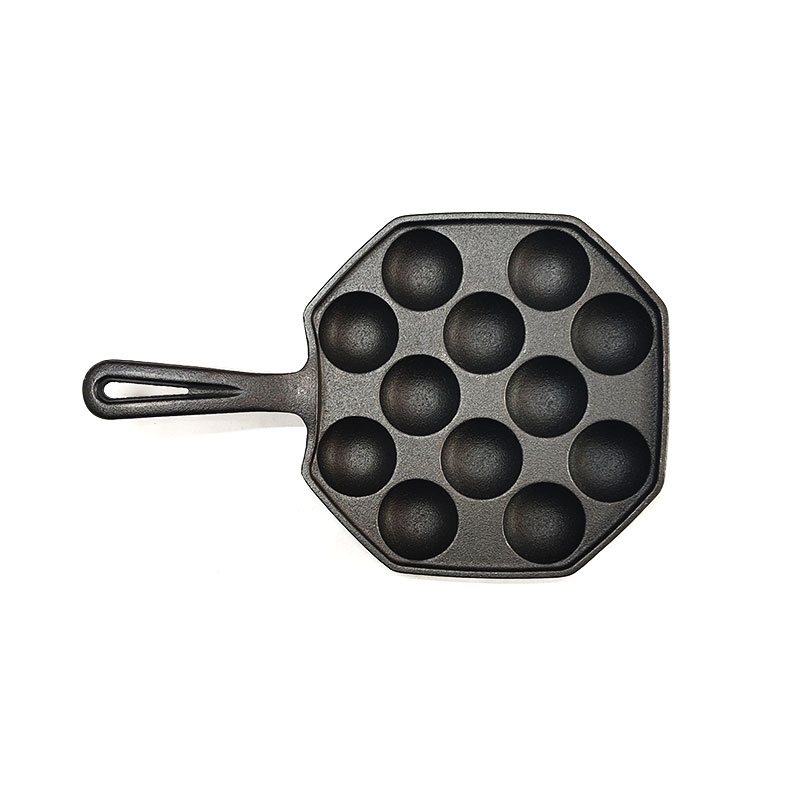
A prime example of functional specialization is the Cast Iron Egg Frying Pot with handle. By utilizing a multi-compartment design, it solves the problem of uneven heat distribution when cooking multiple items simultaneously. Each compartment acts as an independent thermal zone, ensuring that eggs or mini-pancakes are cooked consistently across the entire pan.
The integration of a sturdy handle in these specialized pots prevents the warping often seen in thin-gauge aluminum alternatives. Furthermore, the heat retention of the heavy cast iron keeps breakfast items warm longer after they are removed from the heat source, enhancing the overall dining experience.
Evolution of Enamel and Seasoned Finishes
While raw seasoned iron is ideal for high-heat searing, enamel-coated cast iron (as seen in Enamel Pots and Casseroles) offers a different set of advantages. Enameling involves fusing a glass-based coating to the iron, which creates a non-reactive surface perfect for acidic foods like tomato sauces.
The technical challenge for a manufacturer is ensuring the enamel adheres perfectly without bubbling or cracking. This requires precise temperature control during the firing process and a meticulously cleaned iron surface. The result is a piece of cookware that combines the heat retention of iron with the ease of cleaning associated with ceramics.
Choosing between seasoned and enameled iron depends on the intended application. Seasoned iron is the choice for those seeking a lifetime tool that improves with use, while enamel is preferred for slow-braising and aesthetic versatility in the kitchen.
Procurement Evaluation Framework
When evaluating a cast iron cookware manufacturer, procurement officers should look beyond the product catalog and examine the production infrastructure. The presence of automated injection molding lines and spectrometers for material analysis is a strong indicator of quality consistency.
Certification standards such as ISO 9001, FDA, and LFGB are non-negotiable for international trade, as they verify that the cooking surfaces are free from harmful toxins and meet global food contact safety requirements.
The following framework provides a relative assessment of different cast iron types based on typical commercial and consumer requirements.
| Feature | Seasoned Iron | Enameled Iron | Evaluation Factor |
|---|---|---|---|
| Heat Limit | Very High | Moderate | Searing Capability |
| Acidity Resistance | Low | High | Chemical Stability |
| Maintenance | Regular Oiling | Easy Wash | User Effort |
| Lifespan | Multi-generational | High (if not chipped) | Durability |
| Surface Type | Polymerized Oil | Vitreous Glass | Material Composition |
| Primary Use | Frying/Grilling | Stewing/Baking | Application Fit |
Questions & Answers
Seasoned cast iron is treated with baked-on oil to create a natural non-stick surface, making it ideal for high-heat searing and frying. Enameled cast iron is coated with a glass-like layer that prevents the iron from reacting with acidic foods and eliminates the need for oil-based seasoning, making it superior for braising, stewing, and easier cleaning.
After washing with warm water and drying completely, apply a thin layer of high-smoke-point oil (like grapeseed) to all surfaces. Bake the pan upside-down in an oven at 375°F (190°C) for approximately one hour. This creates a polymerized layer that prevents rust and provides non-stick properties. Repeat this process periodically to maintain the surface.
Yes, cast iron is naturally ferromagnetic, making it highly compatible with induction cooktops. To ensure optimal performance, it is important to use a pan with a flat bottom to maximize the contact area with the induction coil, which ensures efficient energy transfer and uniform heating across the base.
A thickened base increases the thermal mass of the cookware, which allows it to "lock" in heat more effectively. This prevents rapid temperature drops when food is added and minimizes the impact of heat source hotspots, resulting in more even cooking and a more consistent sear across the surface of the pan.
Yes, because it is extremely durable and can last for decades or even generations if properly maintained. This stands in contrast to synthetic non-stick pans that degrade and must be replaced every few years. Additionally, the natural seasoning process uses biodegradable oils rather than PFAS or other synthetic chemicals.
Clean the pan with hot water and a soft brush immediately after use. Avoid soaking the pan in water or using harsh detergents and steel wool, as these can strip the polymerized oil layer. For stubborn residue, use a coarse salt scrub. Always dry the pan immediately and apply a light coat of oil before storage.
Final Thoughts
The enduring appeal of cast iron lies in its synergy of simplicity and performance. From the precision of a multi-hole egg pan to the versatility of a Dutch oven, the material's ability to manage heat remains unmatched by modern alloys.
By focusing on metallurgical purity, precise bottom thickness, and rigorous seasoning standards, a professional cast iron cookware manufacturer provides tools that are not just kitchenware, but long-term investments in culinary quality and health.