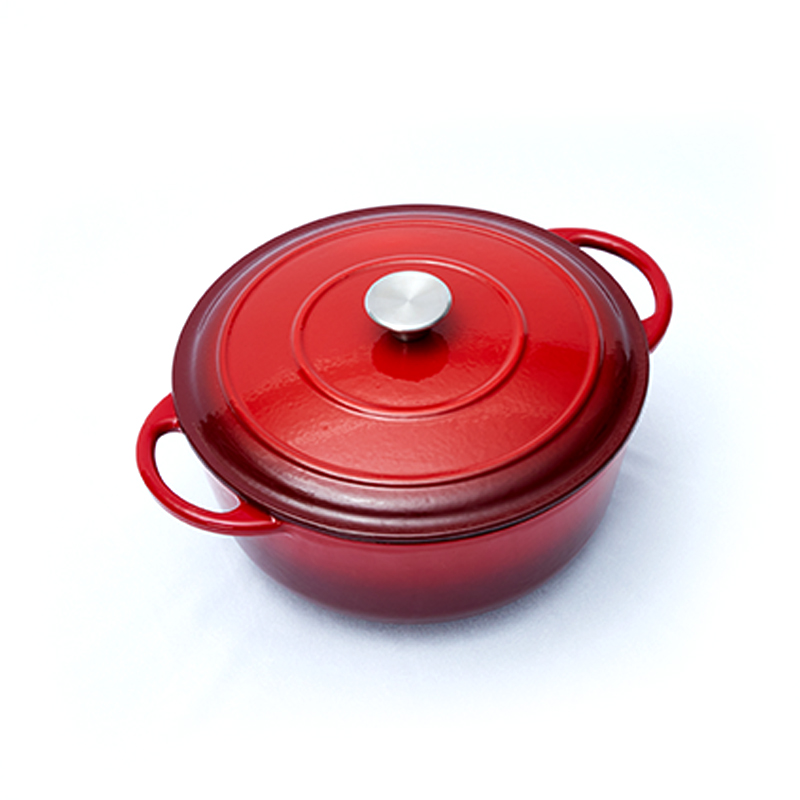

Enamel cast iron casserole
Our cast-iron enamel pot has an attractive appearance and is designed to be safe and environmentally friendly for everyday cooking. It’s a healthy choice for food preparation, combining durable enamel with the strength of cast iron.
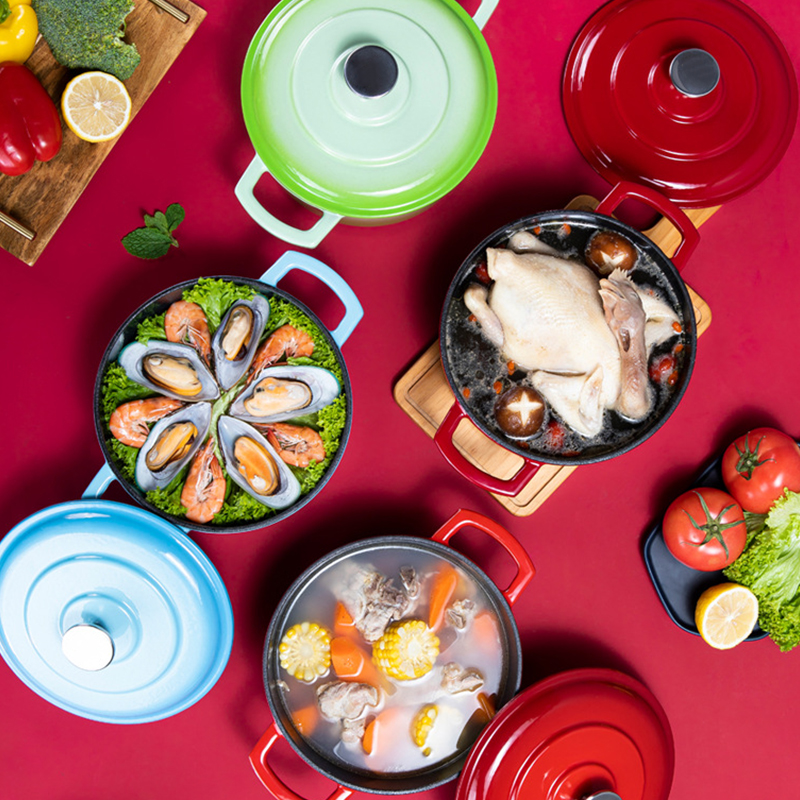
The excellent heat retention ensures even cooking, whether you slow-braise meats, bake artisan bread, or simmer hearty stews. Its natural non-stick surface makes cooking and cleaning effortless, while the tightly fitted lid locks in moisture and flavor for consistently tender results.
Designed for versatility, it moves seamlessly from stovetop to oven to table—making it ideal for one-pot meals and stylish serving. Ergonomic handles provide a secure grip, and the eye-catching enamel exterior enhances your dining presentation.
Your Gateway to Effortless Gourmet Cooking
Discover the joy of stress-free cooking with our enamel cast iron casserole—an everyday kitchen essential that simplifies gourmet meal preparation. Perfect for modern home cooks who value both performance and style, this casserole delivers professional-grade results with convenient everyday usability.
Thick cast iron walls distribute heat evenly, helping to eliminate hot spots for searing, braising, and baking. The durable enamel finish resists staining and chipping, maintaining an attractive appearance through years of regular use. The wide cooking surface gives you ample space to brown meats or sauté vegetables before adding liquids for stews and soups.
Enamel Cast Iron Casserole Recipes
One of the biggest reasons home cooks and professionals love enamel cast iron casserole cookware is its ability to turn simple ingredients into deep, rich, restaurant-quality flavors. With its heavy base, superior heat retention, and naturally non-reactive enamel coating, this cookware is well suited to slow-cooked meals, layered flavors, and one-pot dishes. When preparing enamel cast iron casserole recipes, the goal is always the same: rely on the pot’s steady heat and moisture-locking lid to achieve tender textures and caramelized aromas that lighter cookware simply can’t replicate.
A classic example is a slow-braised beef casserole. With an enamel cast iron casserole, you can brown the meat evenly, then gently simmer it for hours without scorching. Vegetables soften into the sauce, collagen breaks down into a velvety richness, and the dish develops a depth that stainless steel or non-stick pans cannot match. Another popular approach is Mediterranean tomato-herb chicken, which benefits from the pot’s ability to maintain a consistent simmering temperature. Because the enamel surface does not react with acidic ingredients, tomatoes, wine, and lemon cook down cleanly into a bright, balanced sauce.
For plant-forward cooking, an enamel cast iron casserole is excellent for vegetable stews, lentil curries, and French-style ratatouille—recipes that depend on slow heat to bring out natural sweetness. Root vegetables soften evenly, and legumes achieve a creamy consistency without sticking to the bottom. Even baking recipes—such as no-knead bread, herb-seasoned pot roasts, or creamy potato gratins—perform beautifully because the casserole functions like a mini-oven, distributing heat evenly across all sides.
No matter the cuisine, recipes designed for an enamel cast iron casserole share the same advantage: they use the pot’s unique thermal stability to build deeper layers of flavor with minimal effort. For home cooks seeking dependable, high-flavor results, this cookware remains one of the most versatile and rewarding tools in the kitchen.
Cleaning an Enamel Cast Iron Casserole Dish—The Right Way to Protect Its Enamel & Longevity
Cleaning your enamel cast iron casserole dish properly is essential to maintain its smooth enamel surface, preserve heat performance, and extend its service life. Many home cooks worry about damaging the enamel coating or dealing with stubborn stains, but with a few simple steps, keeping your dish looking new is easy and stress-free. First, always allow the casserole to cool naturally before washing. Thermal shock—such as placing a hot dish under cold water—can stress the enamel and may lead to tiny cracks over time. Once cooled, wash with warm water and a mild dish soap to dissolve grease and food residue. Unlike traditional bare cast iron, enamel cast iron casserole dishes can be cleaned with soap and do not require seasoning.
For stuck-on food, avoid harsh metal scrubbers. Instead, soak the dish in warm soapy water for 15–20 minutes. This helps loosen food particles without scratching the enamel. Use a soft sponge or a nylon brush for the safest cleaning. If discoloration or stubborn stains remain—especially after braising or baking—you can create a paste of baking soda and water and gently rub in circular motions to lift stains without abrading the coating. Another effective option is to simmer a mixture of water and a spoonful of baking soda inside the casserole for several minutes to help release burnt residues naturally.
It is also important to dry the casserole completely before storing it. While enamel helps protect against rust, the exposed rims can still oxidize if left damp. Store the lid separately, or place a soft cloth between the lid and the pot to maintain interior airflow and help prevent odor buildup. By following these cleaning steps, your cast iron casserole dish will stay glossy, stain-resistant, and ready for years of cooking.
Enamel Cast Iron Casserole vs. Cast Iron Dutch Oven—What’s the Difference?
When shoppers compare enamel cast iron casserole products with cast iron dutch oven cookware, they often notice that both look similar at first glance, yet they serve slightly different purposes in the kitchen. Both are made from thick, heavy cast iron that holds heat exceptionally well. However, the key differences come down to design, coating, and typical use. An enamel cast iron casserole is coated with a smooth porcelain enamel layer that helps prevent rust, removes the need for seasoning, and makes cleaning easier. The enamel surface is also ideal for acidic dishes—such as tomato-based sauces or wine-braised meats—because it does not react with ingredients. In contrast, traditional cast iron dutch oven cookware typically features a raw, seasoned cast iron interior, delivering the classic cast iron flavor profile and natural non-stick patina, but requiring regular seasoning and more careful maintenance.
Shape and cooking style further distinguish the two. An enamel cast iron casserole usually has a wider, shallower profile, which makes it well suited for baking, roasting vegetables, browning larger meat cuts, and preparing dishes that benefit from more surface area. It also transitions seamlessly from stovetop to oven and then to the table, thanks to its colorful enamel finish. Meanwhile, a cast iron dutch oven is generally deeper with taller sidewalls, designed for soups, stews, sourdough bread, and slow braising—where heat needs to circulate around ingredients over long periods.
Heat performance is comparable for both. However, the casserole’s broader base supports superior browning and reduction, while the dutch oven’s depth excels at moisture retention. Ultimately, choosing between an enamel cast iron casserole and a cast iron dutch oven depends on your cooking habits: casseroles are ideal for everyday versatility and presentation, while dutch ovens are the go-to for long, slow, flavorful cooking. Both complement each other and remain essential for a well-rounded kitchen.