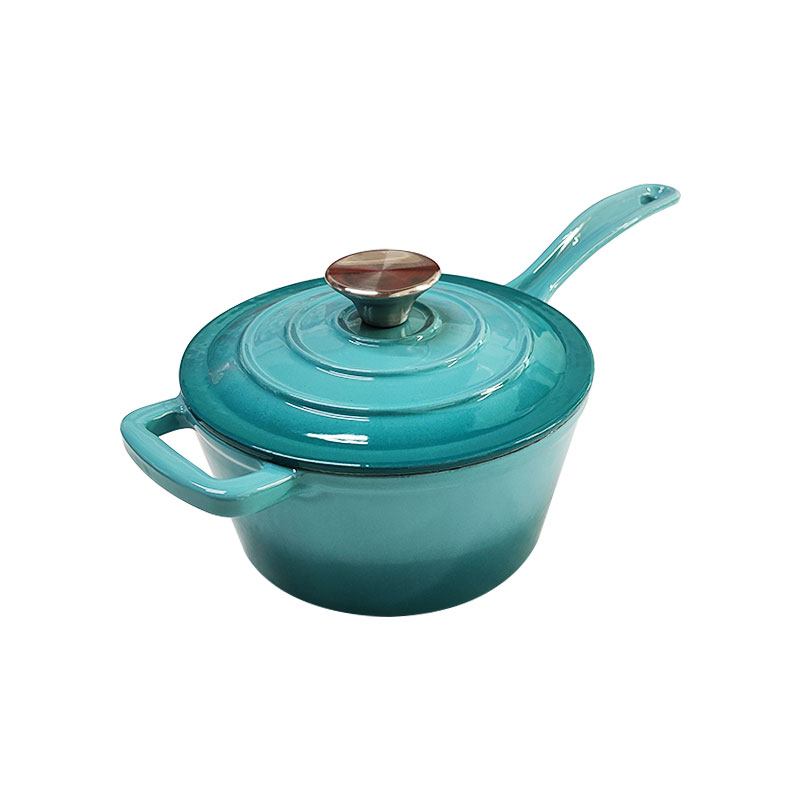

Enameled Customizable High Quality Cast Iron Milk Pan / Stock Pot With Long Handle
Size: 37cm × 19.2cm × 9.8cm; weight: 3.2 kg. MOQ 100 pieces; price $9.1 per piece; packing: brown box or color box; coating: enameled, color customizable. Lead time: sample 7 days; bulk 20 days.
- Type: Soup & Stock Pots
- Applicable Stove: General Use for Gas and Induction Cookers
- Metal Type: Cast Iron
- Product Name: Enamel Cookware Casserole
- Size: 14.8 × 7.2 cm; 18 × 10 cm or Custom
- Logo: Customized Logo Accepted
- Usage: Home Cooking
This versatile enameled cast iron duo combines timeless craftsmanship with modern functionality, making it suitable for both delicate milk-based drinks and hearty soups. The milk pan ensures gentle, even heating—ideal for frothing milk, preparing chai, or making baby formula—while the stock pot is designed for simmering broths, boiling pasta, and cooking one-pot meals.
The high-quality enamel coating helps prevent rust, eliminates the need for seasoning, and resists sticking without chemical nonstick layers. Its cast iron core retains heat effectively, helping to reduce energy use and keep contents warm for longer. The ergonomic long handle provides a secure grip for safe pouring, even when full, while remaining cool enough to touch.
Cast Iron vs Nonstick: Which Milk Pan Is Better for Heating Milk?
A cast iron milk pan excels in durability and heat retention, distributing heat evenly to help prevent hot spots that can scorch milk. Unlike nonstick pans—which can wear over time and may release harmful substances at high temperatures—cast iron is chemical-free and naturally nonstick when properly seasoned. The heavy material maintains steady warmth, keeping milk hot for longer without frequent reheating. Flavor preservation is also better with cast iron, as it does not react with acidic ingredients and can enhance the richness of drinks such as hot chocolate or chai.
What Is the Difference Between a Stock Pot and a Dutch Pot?
A stock pot is tall and narrow, designed for boiling liquids such as stocks, soups, and pasta. A Dutch oven is shorter and wider, with thick walls for slow-cooking stews, braising, and baking. Stock pots often use thinner metal and may not include a lid, while Dutch ovens are typically heavy (usually cast iron or enameled) with tight-fitting lids to retain moisture. Dutch ovens can go from stovetop to oven, offering greater versatility, while stock pots are best suited for high-volume boiling.