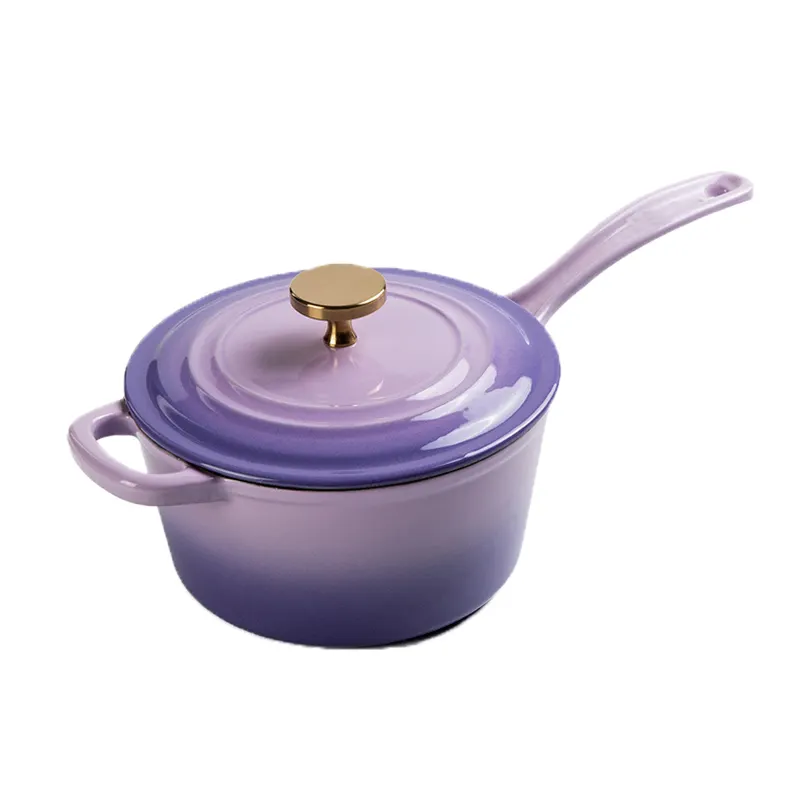

Premium Cast Iron Enamel Milk Pan Stew Pot / Stock Pot With Iron Handle
Made from cast iron, with a cast iron pre-seasoned coating or cast iron enamel coating; color and size can be customized. Packaging is also customizable. Sample lead time is 5 days (free samples), with bulk production lead time of 20 days.
- Type: Soup & Stock Pots
- Applicable Stove: General Use for Gas and Induction Cookers
- Metal Type: Cast Iron
- Product Name: Enamel Cookware Casserole
- Size: 14.8 × 7.2 cm; 18 × 10 cm or custom
- Logo: Customized Logo Acceptable
- Usage: Home Cooking
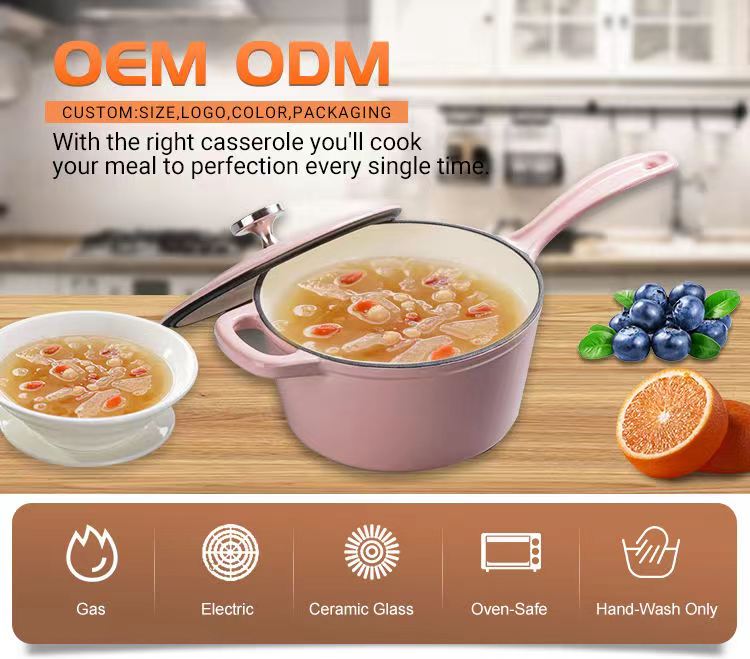
Customize your pot with personalized engravings or colors to create a unique kitchen heirloom. Oven-safe and compatible with all stovetops (including induction), this set transitions seamlessly from the stovetop to the table. Easy to clean and naturally non-reactive, it is a healthier choice for families—no metallic taste and no harmful coatings.
Whether you’re warming milk for a latte or simmering a rich stock, this dual-purpose enameled cast iron set delivers outstanding durability, elegance, and performance. A lifetime piece for passionate cooks who value both form and function.
Is a Cast Iron Milk Pan Safe for Babies and Families?
Cast iron is among the safest options for family cooking. Unlike nonstick pans that may involve potentially harmful coatings, cast iron is natural and releases trace amounts of dietary iron into food—helpful in preventing anemia. It is suitable for preparing baby formula or warm milk, as it does not leach chemicals such as aluminum or PFOA. The sturdy material is also resistant to scratches that could otherwise harbor bacteria. For best safety, avoid frequently cooking highly acidic foods (such as tomato sauce), as excessive iron absorption may occur. With proper seasoning and maintenance, a cast iron milk pan is a healthy, chemical-free choice for all ages.
What Are the Different Types of Stock Pots?
Stock pots differ by material, size, and design. Stainless steel is the most common option, offering durability and even heating. Aluminum stock pots are lightweight but may react with acidic foods. Nonstick versions are also available; however, they are less suitable for high-heat boiling. Some models come with glass lids for monitoring, while others include strainer inserts for pasta. Commercial-grade stock pots are deeper for large batches, while home versions typically feature ergonomic handles for easier pouring.
How to Prevent Milk from Burning in a Cast Iron Milk Pan
To prevent milk from burning in a cast iron pan, warm it gently over low to medium heat. Cast iron retains heat strongly, so high temperatures can quickly scorch milk. Stir continuously with a wooden spoon to promote even heating and help prevent a film from forming on the bottom. For added protection, rinse the pan with cold water before adding milk to create a temporary barrier. Avoid multitasking—milk boils over quickly, so monitor it closely and remove it just before bubbling. Allow the pan to cool before cleaning to help prevent thermal shock. With patience and attention, cast iron heats milk thoroughly without sticking or burning.
How to Properly Care for Your Cast Iron Milk Pan
Proper care helps maintain the longevity and performance of your cast iron milk pan. After each use, clean it with warm water and a soft brush—avoid soap to preserve the seasoning. Dry it thoroughly on the stovetop to evaporate any moisture, then apply a thin layer of food-safe oil (such as coconut or flaxseed) to prevent rust. For deeper seasoning, bake the oiled pan upside down at 375°F (190°C) for one hour. Store in a dry place, and if rust appears, scrub with vinegar and reseason. Do not soak the pan or use metal utensils. With consistent maintenance, your pan will develop a natural nonstick patina and last for generations.
What Size Cast Iron Milk Pan Do You Really Need?
Choosing the right size depends on your cooking needs. A 0.5 L pan is suitable for individuals preparing single servings of milk or small-batch drinks. The 1 L size is versatile for couples or for making two cups of cocoa. For families or when entertaining, choose 1.5 L+ to prepare multiple servings or creamy sauces. Also consider storage space, as larger pans are heavier. A 1 L pan often provides the best balance for everyday use, while compact 0.5 L versions are ideal for travel or smaller kitchens. Select the capacity that matches your routine to help avoid overheating or frequent refills.