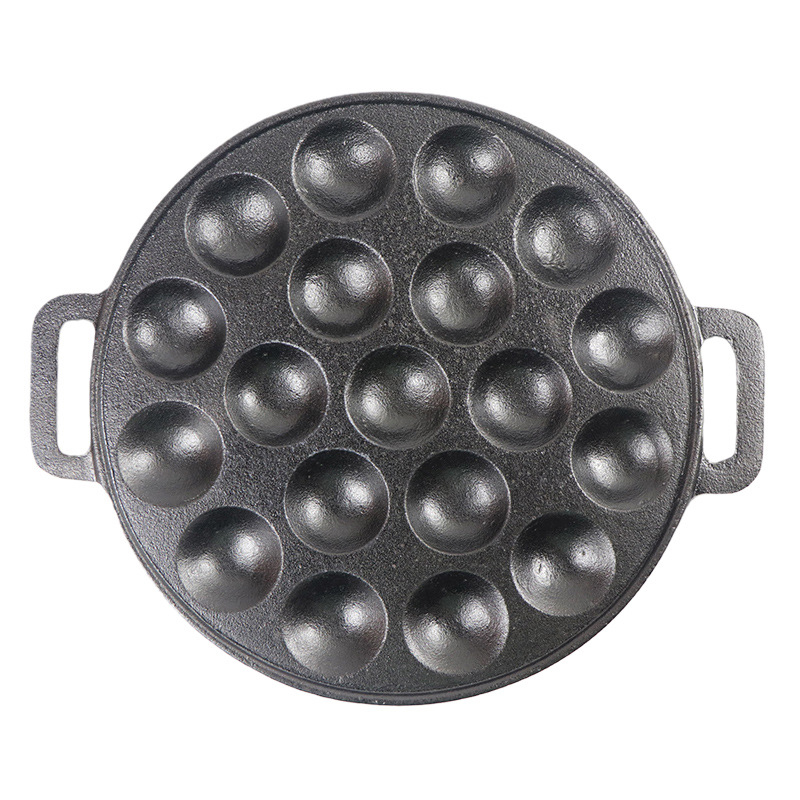

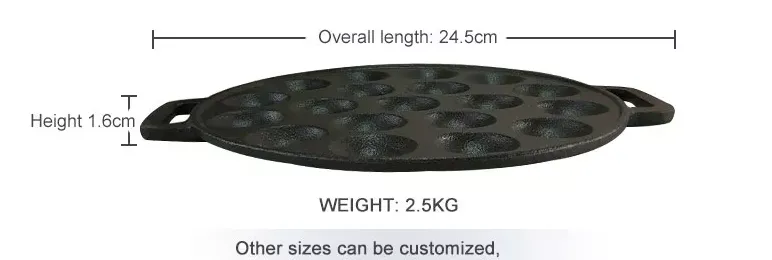
Hot Sale 19 Holes Pre-Seasoned Cast Iron Cookware Nonstick Cake Mould Pan
Made from cast iron, it comes with either a pre-seasoned cast-iron coating or a cast-iron enamel coating; color can be customized. Sizes and packaging are available to your specifications. Sample lead time is 5 days (free), with bulk production in 20 days.
1. Non-stick coating cooking surface for safer, healthier cooking with no harmful effects to the human body. Environmental protection and safety.
2. Cast-iron pans are known for their non-stick performance after boiling; the longer they are used, the more non-stick they become.
3. Suitable for general use on gas cookers, induction cookers, open fires, and more—easy to use.
4. Thickened pan bottom with super heat-locking for more even heating.
How to Bake Moist, Golden Cakes in a Cast Iron Pan
For best results, preheat the cast iron pan in the oven before adding the batter to support even cooking. Lightly grease the pan with butter or oil to improve browning and help prevent sticking. Reduce the oven temperature by 25°F (15°C) versus recipes designed for aluminum pans, since cast iron retains heat more effectively. The pan’s slow heat release helps keep cakes moist while forming a caramelized exterior. For added assurance, place parchment paper at the bottom. This approach produces a tender crumb texture with a bakery-style golden finish.
Cast Iron vs. Aluminum: Which Cake Pan Is Right for You?
Cast iron excels at heat retention, delivering cakes that bake evenly with crisp edges. Aluminum heats quickly but cools faster, which can lead to uneven results. Aluminum is lighter and typically more cost-effective, but it is prone to warping; cast iron’s weight supports stability and long service life. For delicate cakes (e.g., angel food), aluminum’s fast heat transfer can be advantageous. For dense, moist cakes (e.g., pound cake), cast iron’s consistent heat is the better choice. Select based on your baking style and the texture you want to achieve.
Versatile Baking: What Else Can You Make in a Round Cast Iron Cake Pot?
Beyond cakes, this pot is ideal for baking bread, cobblers, and savory dishes such as deep-dish quiches or skillet cookies. Its depth also works well for layered desserts (e.g., tiramisu) and steamed puddings. For breakfast, try Dutch baby pancakes or frittatas. Thanks to its even heat distribution, it is well suited for slow-baked fruit crisps and sticky toffee pudding. You can also use it on the stovetop for caramelizing fruit or melting chocolate, making it a true multitasker in the kitchen.