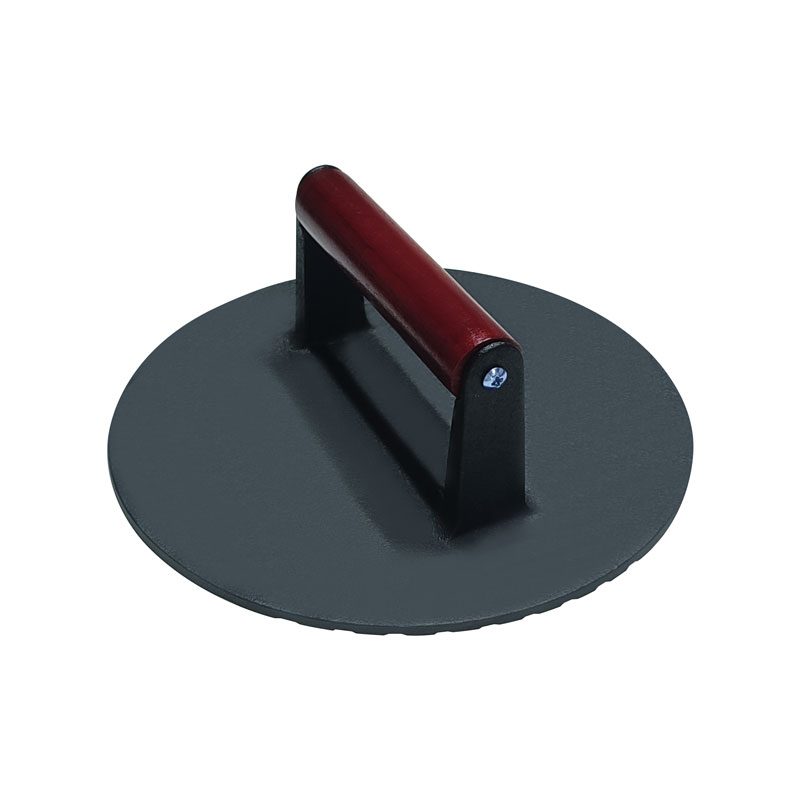

Hot Selling BBQ Non Stick Round Shape Pre-seasoned Cast Iron Bacon Press Meat Press Steak Patty Maker
Size 21.2 × 21.2 × 7.8 cm, weight 1.3 kg; MOQ 100 pcs; price $2.6 per piece. Coated with pre-seasoned black finish and packed in brown boxes or color boxes. Lead time: 7 days for samples and 20 days for bulk orders.
1. Non-stick coating cooking surface for more healthy cooking without harm to the human body; environmental protection and safety
2. Cast-iron pans feature a non-stick performance after boiling; the longer they are used, the more non-stick they become
3. General use for gas stoves, induction cookers, open flame, and more—easy to use
4. Thicker pan base for improved temperature locking, with even heat distribution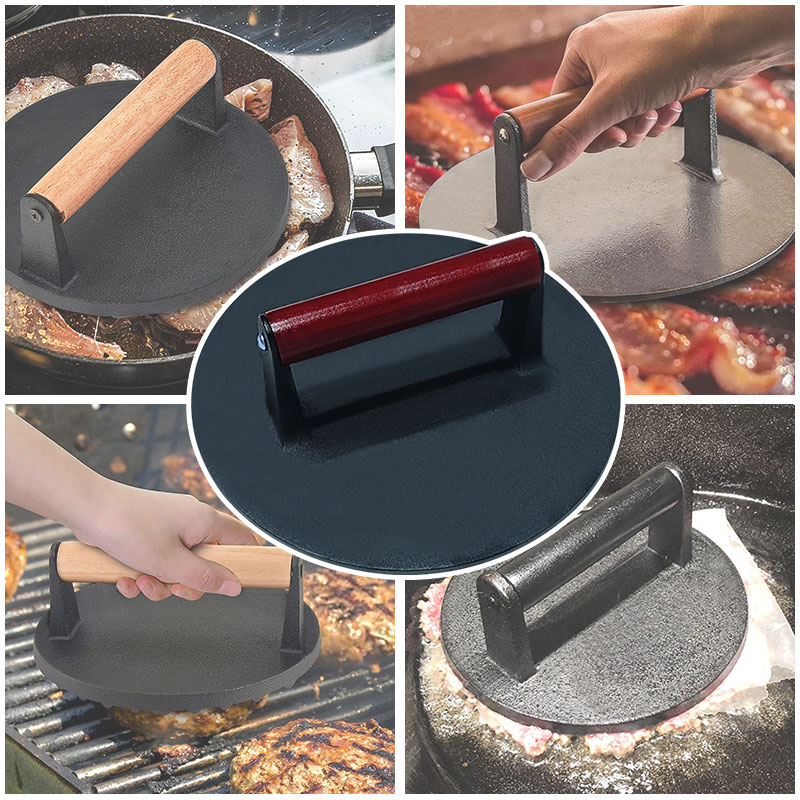
Why You Need a Cast Iron Bacon Press for Perfectly Crispy Bacon
A cast iron bacon press solves three common bacon cooking frustrations: uneven cooking, stubborn curling, and inconsistent texture. Its substantial weight (typical range: 1.5–3 lbs) flattens the strips against the cooking surface, ensuring full contact for uniform browning without the need for constant flipping. The thermal mass absorbs and radiates heat downward, helping to render fat faster while reducing the pooling effect that can leave some areas soggy. Unlike lighter presses that simply hold the shape, cast iron’s density actually cooks the bacon from both sides, delivering the ideal balance of crisp edges and tender, chewy centers. Professional chefs rely on this tool because it replicates commercial griddle conditions, turning home-cooked bacon into diner-quality results with a satisfying crunch.
Top Benefits of Using a Cast Iron Grill Press for Bacon and More
This multitasking tool elevates high-heat cooking beyond bacon. When preheated, its searing surface (typically reaching 400°F/204°C) can reduce pan-frying times by 30%, making it ideal for quick weeknight burgers or grilled cheese. The weight helps suppress grease splatter by holding food firmly in place on the cooking surface, keeping stovetops cleaner and reducing the risk of burns. For steakhouse-style crusts, the press provides 25% more surface contact than spatula pressing alone, supporting deeper caramelization and Maillard reactions even on uneven cuts. Campers also value its versatility: by day, it flattens breakfast meats over fire pits; by night, it can serve as a makeshift skillet weight to secure windblown cookware.
Cast Iron vs. Stainless Steel Bacon Press: Which Is Better?
While stainless steel offers corrosion resistance, cast iron’s functional performance is clearly superior. Its heat retention capacity (typically 3x greater than stainless steel) helps maintain consistent temperatures even when cold bacon is added—important for continuous batch cooking. The weight difference is also significant: a typical cast iron press (2.5 lbs) provides 40% more downward force than stainless steel options (1.5 lbs), reducing the need for additional hand pressure. Over time, cast iron develops seasoning that creates natural non-stick properties, which stainless steel cannot replicate. Although stainless steel won’t rust, its thinner construction can warp under prolonged high heat, while cast iron generally improves with proper care. For buyers who prioritize cooking results over maintenance convenience, cast iron is the clear choice.
Write your message here and send it to us