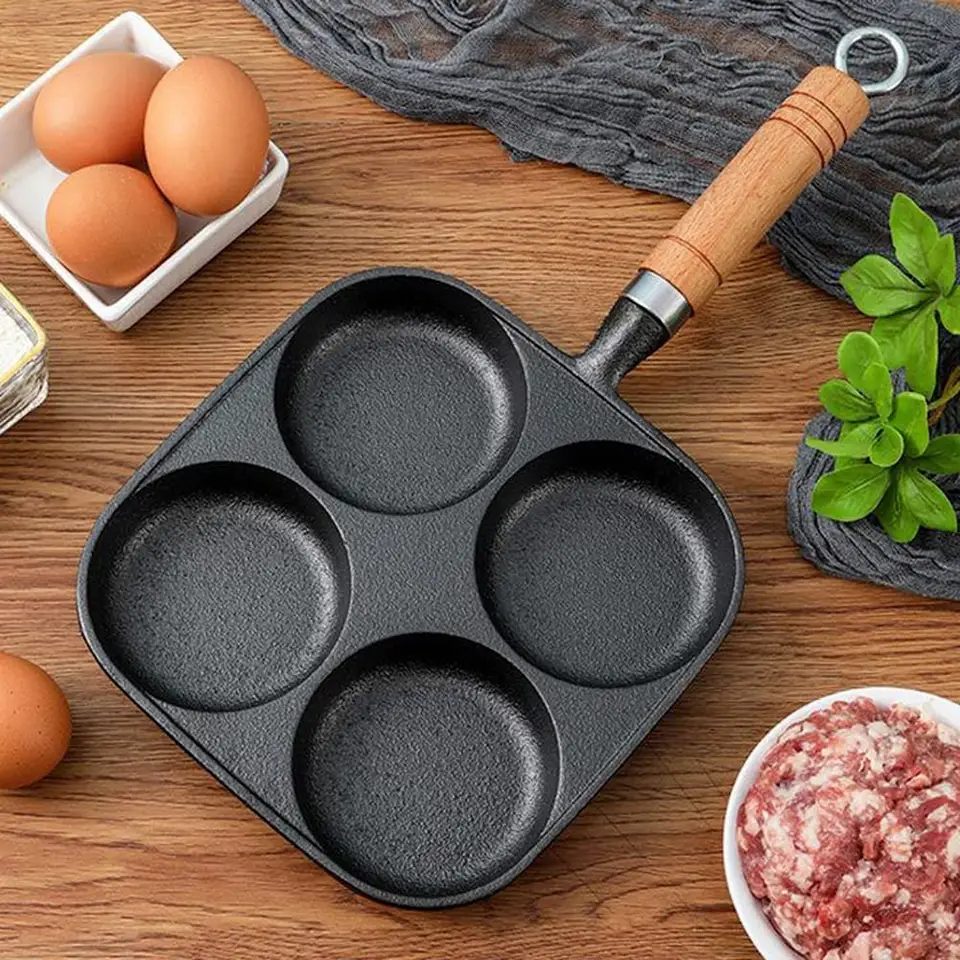
1. Non-stick cooking surface: supports healthier cooking with no harm to the human body. Environmental protection and safety.
2. Cast-iron pans develop improved non-stick performance over time after boiling/initial use; the longer they are used, the more naturally non-stick they become.
3. General-purpose use for gas hobs, induction cookers, open fire, and more—easy to use.
4. Thickened pan base helps lock in temperature and ensures even heating.
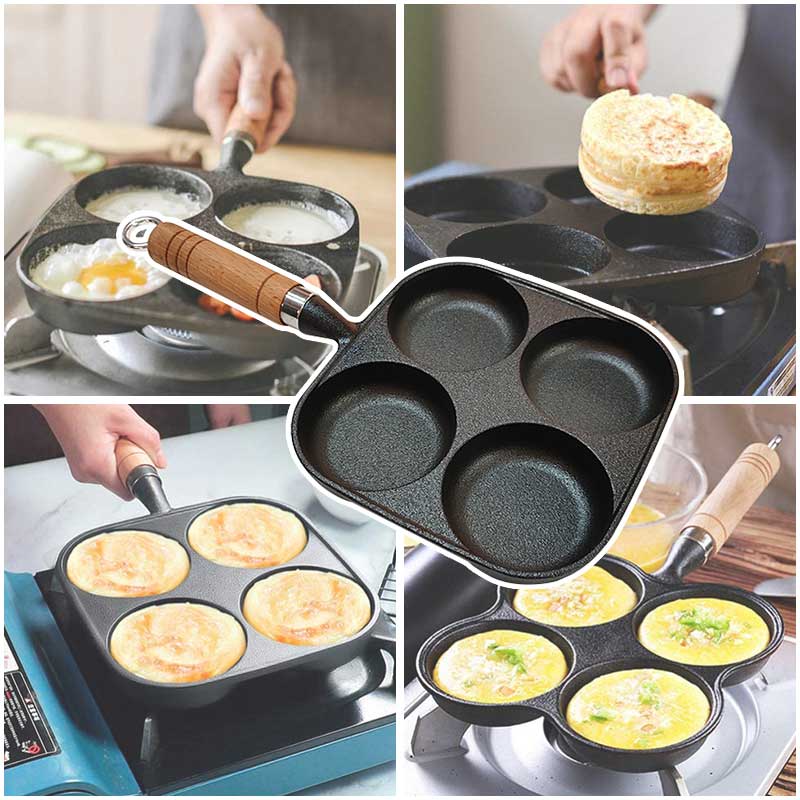
Healthy Cooking with a Cast Iron Four-Egg Frying Pan: Less Oil, More Flavor
The pan’s seasoned surface requires only a light oil coating, helping to reduce fat intake without compromising flavor.
Iron from the pan gradually leaches into food, providing an additional dietary mineral benefit.
Unlike synthetic non-stick coatings, cast iron is free from harmful chemicals (e.g., PFOA), making it a safer option for high-heat cooking.
Its searing performance at lower temperatures helps preserve nutrients in eggs, and the even heat distribution helps prevent charring that can create unhealthy compounds.
Tips for Cooking Multiple Eggs at the Same Time with a Cast Iron Four-Egg Pan
To achieve consistent results when cooking several eggs at once, preheat the pan fully before use to prevent uneven starting temperatures.
Use medium heat to avoid scorching the edges of the compartments.
For different levels of doneness, add eggs in staggered intervals—for example, start with two eggs first if some family members prefer firmer yolks.
Rotate the pan occasionally on the burner to balance heat distribution.
Using a lid helps cook the tops evenly without flipping.
For easy serving, slide a spatula under each egg while slightly tilting the pan to release the edges.
This approach ensures a smooth, efficient breakfast workflow.