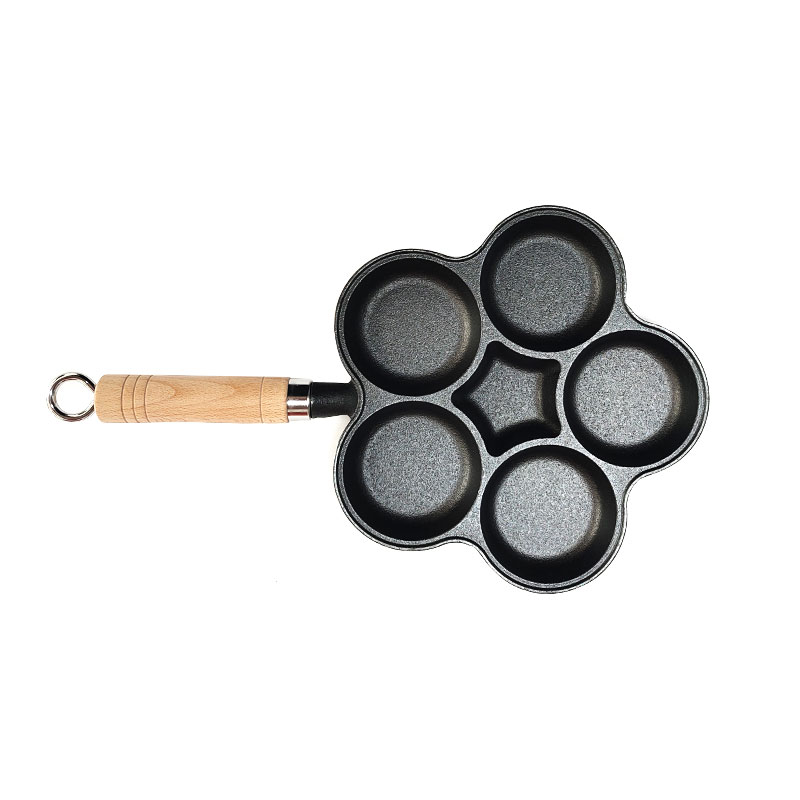

Pre-Seasoned Five Holes Cast Iron Cake Mould Pan/ Egg Frying Pot
Size: 38 cm × 23 cm × 2.3 m; weight: 1.3 kg. Coating: pre-seasoned; color: black; packing: brown box/color box. MOQ: 100 pieces; price: $2.9 per piece; lead time: sample 7 days, bulk 20 days.
1. Non-stick cooking surface coating for healthier cooking with no harmful effects on the human body; environmental protection and safety
2. Cast-iron pans develop improved non-stick performance after boiling; the longer they are used, the more non-stick they become
3. General use for gas stoves, induction cookers, and open-fire cooking; easy to use
4. Thicker pan base helps lock in temperature, ensuring even heating
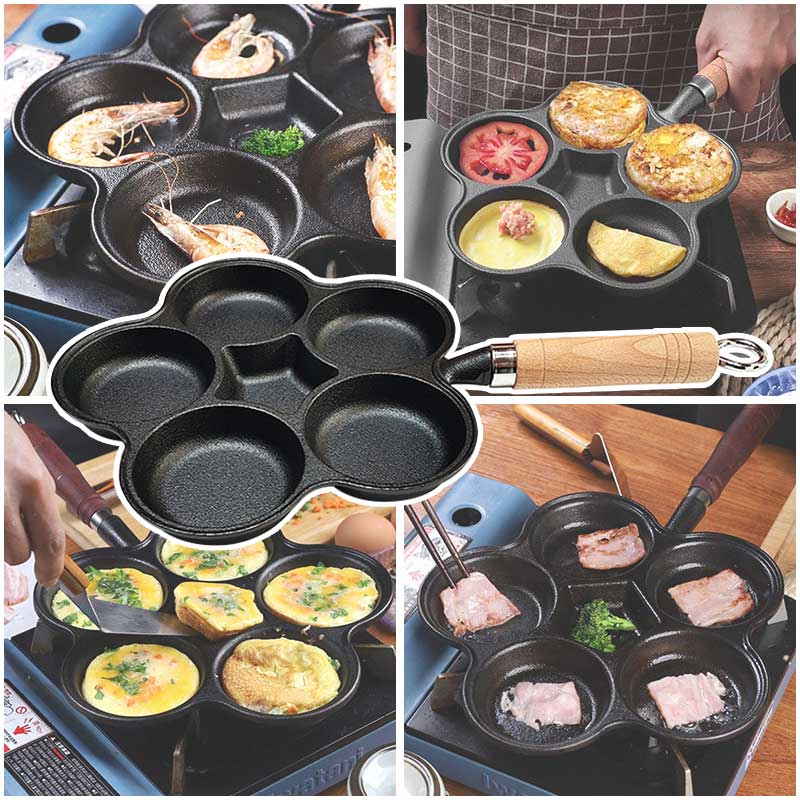
Bake Perfect Mini Cakes with the Five Holes Cast Iron Cake Mould Pan
A cast iron five-holes cake mould pan delivers evenly baked mini cakes with a golden crust and a tender interior. The thick cast iron distributes heat uniformly, helping prevent undercooked centers or burnt edges—issues commonly seen with thin metal pans. Preheat the mould in the oven before adding batter to kick-start the baking process; the retained heat supports consistent rising. Its natural non-stick surface (when seasoned) helps cakes release easily, preserving delicate shapes. Ideal for madeleines, financiers, or muffin tops, the pan’s heat retention also helps keep cakes warm longer after serving.
Why Choose Cast Iron for Your Five Holes Cake Mould Pan?
Cast iron’s superior heat retention and even distribution make it an outstanding choice for baking. Compared with aluminum or steel, it helps minimize hot spots to ensure each mini cake bakes uniformly. The material’s weight helps stabilize temperature changes, which is important for sensitive batters. Over time, seasoning builds a natural non-stick layer, reducing the need for excess grease. Cast iron also withstands extreme oven temperatures without warping, and with proper care it can last for generations. Bonus: It can be used as a stovetop-to-oven tool for caramelizing or finishing cakes under the broiler.
How to Season and Maintain Your Five Holes Cast Iron Cake Mould Pan
After each use, gently clean the cooled pan with warm water and a soft brush—avoid soap to protect the seasoning. Dry immediately, then rub a thin coat of neutral oil (e.g., grapeseed) into every crevice, including the holes. Bake upside down at 375°F (190°C) for one hour to polymerize the oil. Store in a dry place with a paper towel inside to absorb moisture. For stubborn residue, use coarse salt as a scrub. Re-season monthly, or when cakes start to stick. This routine helps prevent rust and supports the pan’s natural non-stick performance over time.