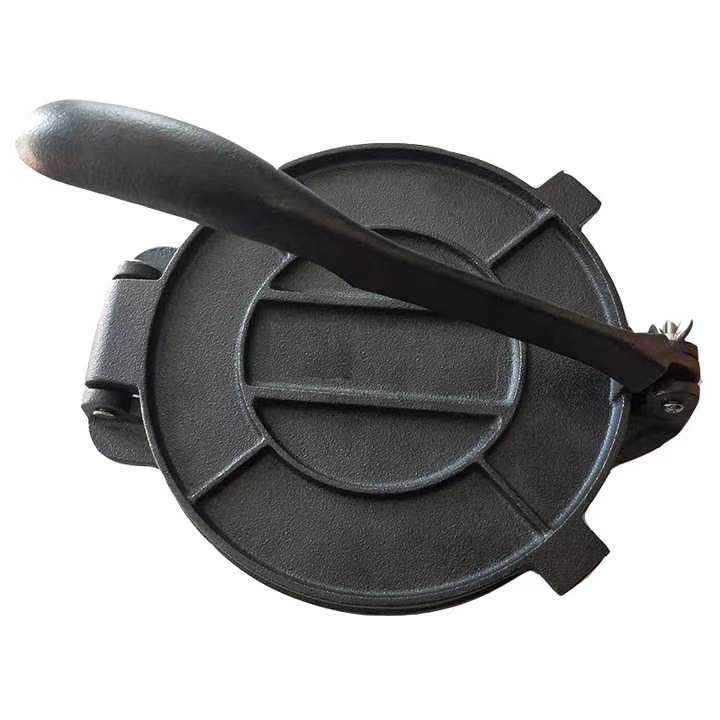

Premium Pre-Seasoned Cast Iron Tortilla Press With Fold Handle
Made from cast iron, with a cast-iron pre-seasoned coating or a cast-iron enamel coating; color and size are customizable. Packaging is customizable as well. Sample lead time is 5 days and bulk lead time is 20 days; samples are free.
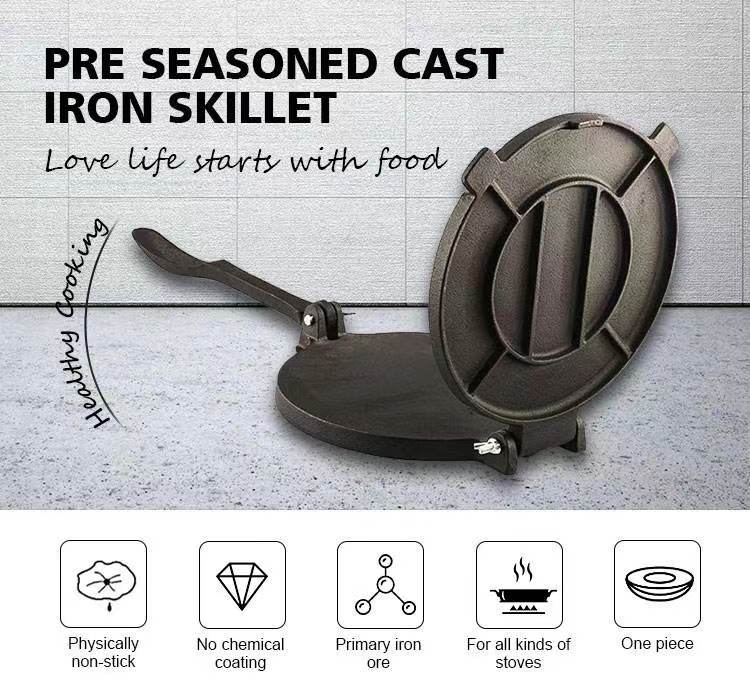
1. Non-stick coated cooking surface for healthier cooking without harm to the human body; environmentally friendly and safe.
2. Cast-iron pans provide non-stick performance after boiling; the longer they are used, the more non-stick they become.
3. Suitable for general use with gas, induction cookers, open fire, and similar heat sources; easy to use.
4. Thickened pan base helps lock in temperature, enabling even heating.
Why a Cast Iron Tortilla Press Is Essential for Authentic Homemade Tortillas
A cast iron tortilla press embodies centuries of culinary tradition, delivering results that modern materials cannot replicate. Unlike lightweight plastic or thin aluminum versions, cast iron’s substantial weight (reference/typical: 8–12 lbs) provides steady, uniform pressure to form paper-thin tortillas with authentic texture. Its thermal mass helps lightly cook the dough during pressing, mirroring the comal-toasted flavor profile of street-vendor tortillas. Traditionally, Mexican abuelitas (grandmothers) preferred cast iron for its ability to achieve the right balance of elasticity and thinness—essential for tacos that hold fillings without cracking. In addition, the material’s natural porosity absorbs trace amounts of masa harina over time, subtly enriching the flavor of each new batch with deeper corn notes. For cooks seeking genuine artisanal results rather than factory-like uniformity, this tool connects them directly to ancestral cooking methods.
How to Use a Cast Iron Tortilla Press for Perfectly Flat Tortillas Every Time
To get the best results, start with portion control: golf-ball-sized dough balls (reference/typical: about 30 g) yield ideal 6-inch tortillas. Place the dough ball centered on the press between two sheets of parchment paper or plastic (cut-open freezer bags work well). Apply firm, even pressure using the lever. The iron’s weight does approximately 80% of the work, so avoid excessive force that could tear the dough. Use a smooth rocking motion from wrist to elbow to ensure even thickness from edge to edge. Pro tip: Rotate the dough 180° after the first press to compensate for any uneven pressure from the arm. If the press is properly seasoned, the pressed tortilla should release cleanly. If sticking occurs, lightly dust with masa flour to prevent adhesion. With practice, you can produce 12–15 tortillas in under 10 minutes—significantly faster than using a rolling pin.
Cast Iron vs. Aluminum: Which Tortilla Press Is Better?
Aluminum presses are lighter (reference/typical: about 3–5 lbs), but they do not offer the decisive advantages of cast iron. Because aluminum has lower mass, it typically requires substantially more manual pressure, which can lead to uneven thickness and torn edges. With frequent use, aluminum hinges may loosen or warp, whereas cast iron’s rigid construction maintains precise plate alignment for the long term. The thermal performance also matters: cast iron retains sufficient residual heat to slightly “pre-cook” the tortilla surface, reducing the raw dough taste. Aluminum cools too quickly to achieve the same effect. Although cast iron costs more initially, it often becomes a multi-generational heirloom; aluminum models usually show wear after only a few years of regular use. For serious tortilla makers, the cast iron press’s superior leverage and durability justify every ounce of its weight.
Write your message here and send it to us