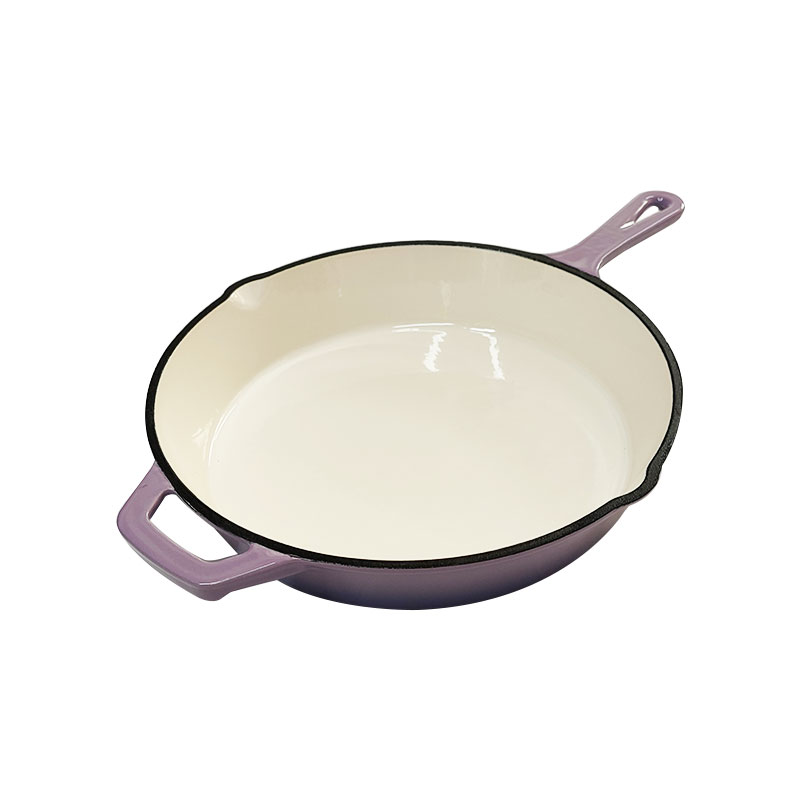

Enameled Customizable High Quality Flat Cast Iron Pan / Skillet
Size: 40.6 cm × 26.2 cm × 5 cm, weight: 2.32 kg. Enameled with customizable color; packed in a brown box or color box. MOQ is 100 pieces, priced at $6.5 per piece; lead time is 7 days for samples and 20 days for bulk orders.
1. Non-stick enameled cooking surface for safer, healthier cooking—designed with human safety and environmental protection in mind.
2. Cast-iron pans deliver improved non-stick performance after boiling; the longer they are used, the more non-stick they become.
3. Suitable for general use on gas cookers, induction cookers, open fire, and similar heat sources—easy to use.
4. Thickened pan base helps lock in temperature and supports even heating.
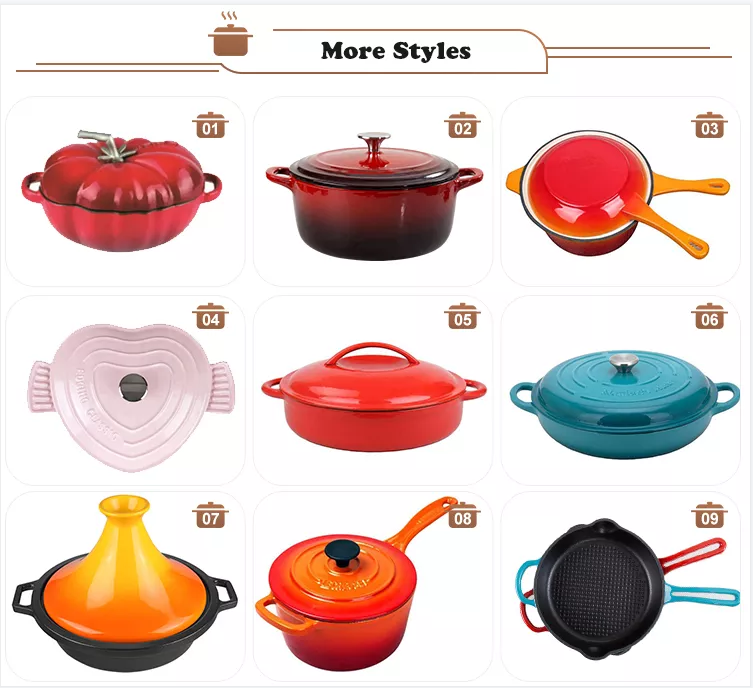
Why Choose an Enameled Flat Cast Iron Pan for Everyday Cooking
An enameled flat cast iron pan combines the excellent heat retention of traditional cast iron with a smooth, low-maintenance cooking surface. The enamel coating helps prevent rust and eliminates the need for seasoning, making it a practical choice for busy home cooks. Unlike bare cast iron, it does not react with acidic foods such as tomatoes or wine, helping preserve flavors without metallic notes. The flat surface promotes even heat distribution, making it suitable for everything from searing meats to simmering sauces. In addition, the attractive enamel finish transitions easily from stovetop to table for family-style serving.
How to Cook Perfect Pancakes and Crepes on an Enameled Flat Cast Iron Pan
The smooth enameled surface of a flat cast iron pan is ideal for making pancakes and delicate crepes. Preheat the pan over medium-low heat to help prevent hot spots, then lightly butter or oil the surface. Thanks to consistent heat, you can achieve even, golden-brown results without burning. For ultra-thin crepes, quickly spread the batter across the surface—enameled coating helps reduce sticking compared with traditional cast iron. Unlike non-stick pans that can wear down over time, enamel helps maintain a slick cooking surface for years, making it a dependable option for everyday breakfast.
Easy Cleaning and Maintenance Tips for Your Enameled Cast Iron Pan
Cleaning an enameled cast iron pan is simpler than cleaning bare cast iron. Allow the pan to cool slightly, then wash with warm, soapy water—no seasoning is required. Avoid abrasive scrubbers that may damage the enamel; use a soft sponge or a nylon brush instead. For stubborn residue, soak with baking soda and water before gently scrubbing. Unlike bare cast iron, enamel is less prone to rust when left damp, although drying it promptly will help extend service life. Occasional stains will not affect cooking performance, making this pan both low-fuss and durable.