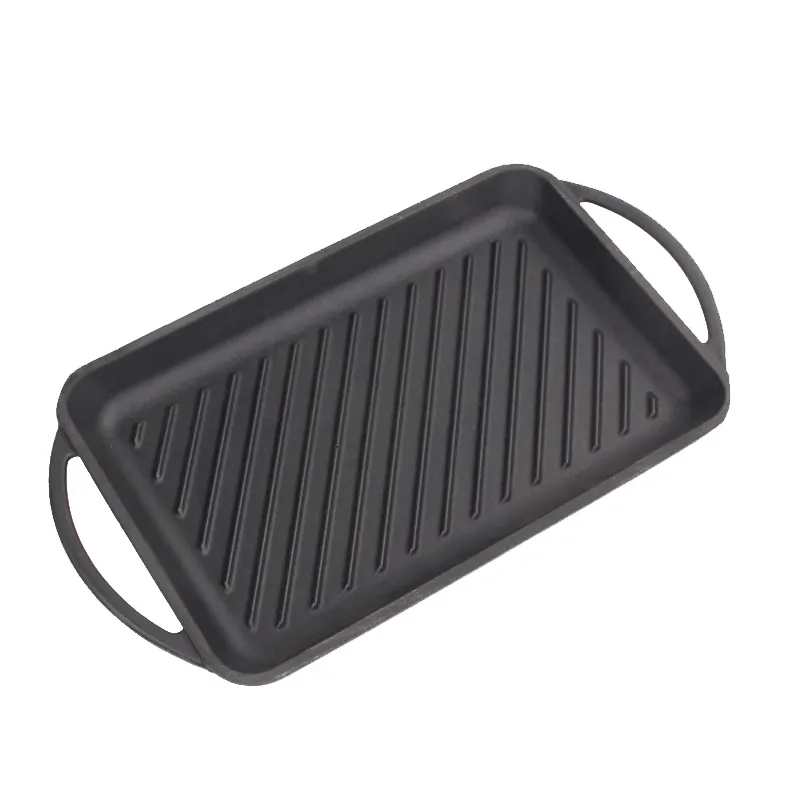

Hot Sale Cast Iron Steak Frying Pan/ Skillet Dish /Griddle Pan
Made from cast iron with a cast iron pre-seasoned coating or cast iron enamel coating; color and size can be customized. Packaging can also be customized. Sample lead time is 5 days (free), with bulk orders taking 20 days.
- Applicable Stove: General Use for Gas and Induction Cookers
- Wok Type: Non-stick
- Feature: Sustainable
- Product Name: Cast Iron Grill Pan
- Logo: Customized Logo Accepted
- Coating: Enamel / Pre-seasoned
- Usage: Home Cooking
- MOQ: 300 pcs
-
How to Clean and Season a Rectangular Grill Pan for Long-Term Use
Proper care helps preserve your grill pan’s performance. After it has cooled slightly, scrub the ridges with a stiff brush and hot water—avoid soap to protect the seasoning. For stubborn residue, sprinkle with coarse salt and scrub using a damp cloth. Dry immediately, then apply a thin coat of oil to help prevent rust. To maintain the non-stick surface, re-season periodically by rubbing with neutral oil and baking upside down at 400°F (200°C) for one hour. Store in a dry place, with a paper towel between pans to absorb any moisture. With this routine, the pan will develop a natural black patina over time, which enhances cooking performance.
Cast Iron vs. Non-Stick Grill Pans: Which Is Better for Searing?
For searing, cast iron grill pans outperform non-stick options every time. The heavy base retains high temperatures required for caramelization, while non-stick coatings can degrade under extreme heat. Cast iron’s natural surface can handle metal utensils and forms a non-stick patina over time, unlike synthetic coatings that scratch and lose effectiveness. Although non-stick pans may be easier to clean, they cannot match the flavor development achieved through cast iron’s Maillard reaction. For cooks who prioritize health, cast iron reduces concerns associated with potential chemical exposure from overheating non-stick surfaces. While cast iron is heavier, its durability supports long-term use—making it a smarter investment.
Rectangular vs. Square Grill Pans: Which Shape Works Best for You?
A rectangular grill pan offers clear advantages over square models thanks to its elongated cooking surface. The extended area accommodates longer ingredients—such as fish fillets or baguettes—without overcrowding, while the tapered ends support more even heat distribution compared with square corners. Square pans may be suitable for smaller burners, but rectangles typically align better with standard stovetop layouts, maximizing usable space. For multi-item grilling (e.g., meats and vegetables at the same time), the rectangular shape allows convenient zoning of high- and low-heat areas. The streamlined profile also stores more efficiently in narrow cabinets than bulkier square alternatives.