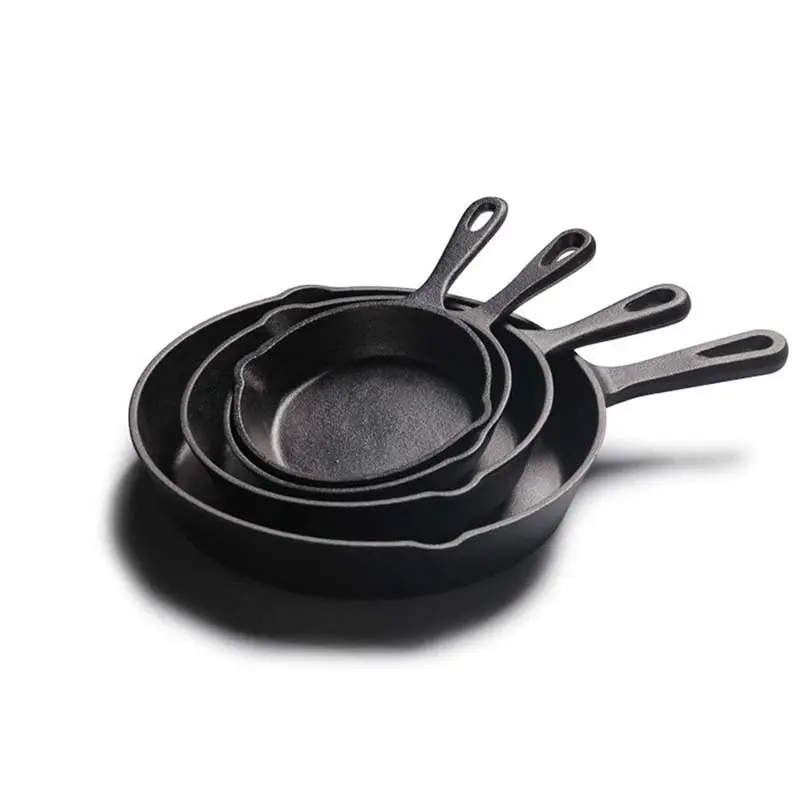

Pre-Seasoned Cookware Cast Iron Skillet Egg frying Pan Non Stick Cast Iron Skillet
Made of cast iron with a pre-dried cast iron coating in black, supplied in brown boxes or color boxes. With a supply capacity of 300,000 pieces per year from Hebei, China, shipping via Tianjin Xingang Port. Sample is free, with a 5-day lead time for samples and 20 days for bulk orders.
1. Cast-iron skillets provide heavy-duty performance with lower side walls and wider cooking surfaces, making them ideal for use on stoves or in ovens.
2. Seasoned cookware. Proper seasoning makes a difference, and the more you use it, the better the seasoning develops.
3. Excellent temperature control with uniform heat distribution and consistent heating.
4. Apply the cast-iron pre-flavor coating immediately after washing. Compatible with all cooking surfaces, grills, and campfires.
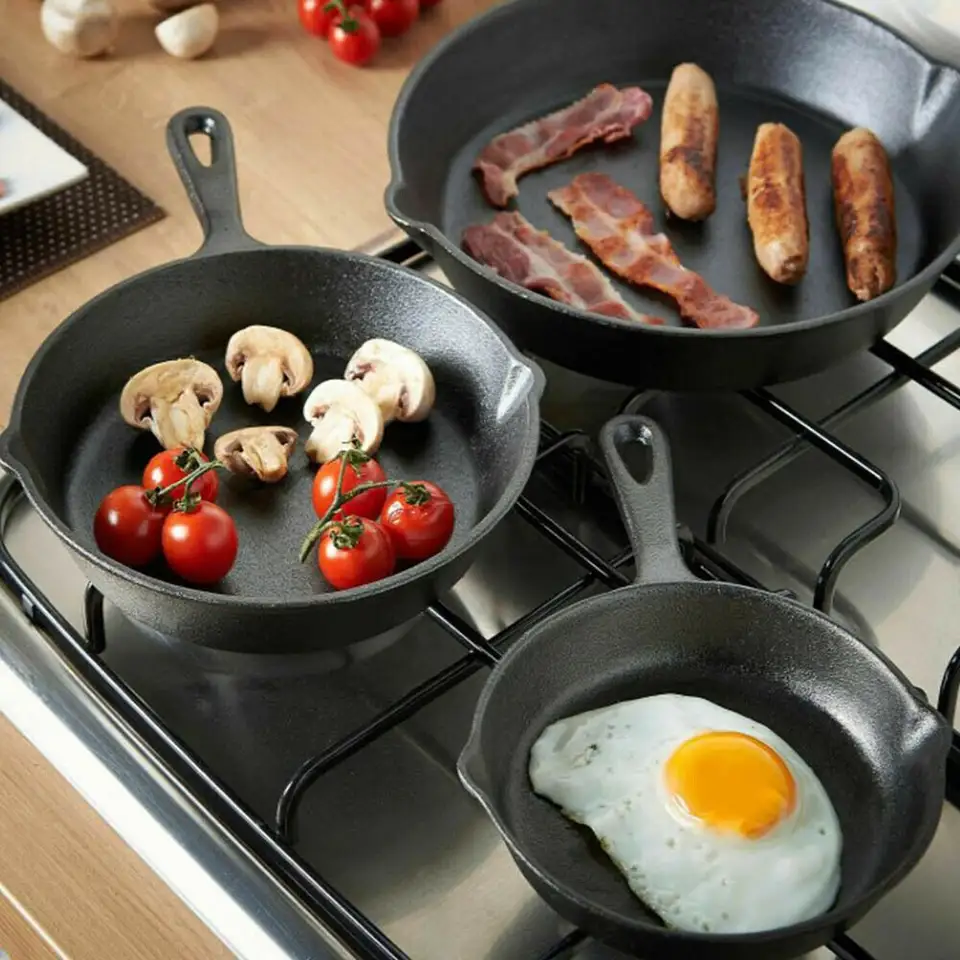
How to Use a Non-Stick Cast Iron Frying Pan Like a Pro
Mastering a cast-iron skillet starts with understanding its unique heat properties. Preheat the pan gradually over medium-low heat for 5 minutes—this helps prevent warping and supports even cooking. Unlike Teflon, cast iron performs exceptionally well for high-heat searing. Gently press meat to maximize contact with the pan’s ridges for a perfect crust. For eggs or pancakes, wait until water droplets dance (Leidenfrost effect) before adding fat—this indicates the ideal non-stick temperature. Stir-fry in small batches to help maintain heat consistency, and avoid metal utensils to help preserve the seasoning. After cooking, allow the pan to cool slightly before cleaning to prevent thermal shock.
How to Season Your Non-Stick Cast Iron Frying Pan for Long-Term Use
Seasoning is a polymerized oil layer that strengthens with use. Begin by scrubbing off any factory coating with soap (it is safe once!). Apply a thin coat of high-smoke-point oil (flaxseed, grapeseed, or avocado) using a lint-free cloth, then wipe off excess—applying too much oil can cause sticky patches. Bake the pan upside down at 450°F (232°C) for 1 hour to bond the oil to the surface. Repeat 2–3 times to build a durable base. Over time, cooking fatty foods (such as bacon and burgers) will naturally replenish the seasoning layer. If food sticks, simply re-season—there is no need to strip the pan unless rust appears.
Non-Stick Cast Iron vs. Teflon: What’s Better for Your Health?
Cast iron’s natural seasoning supports chemical-free cooking. Teflon can release toxic fumes (PFOA/PFAS) if overheated (>500°F/260°C), while cast iron remains stable even at broiling temperatures. Iron can also enrich food with trace minerals, which is beneficial for those with deficiencies. However, Teflon is lighter and generally requires less maintenance. The trade-off is clear: cast iron needs more care but provides long-term safety, while Teflon is convenient but may degrade after years, increasing the risk of microplastic ingestion. For health-conscious cooks, cast iron is the clear long-term choice.