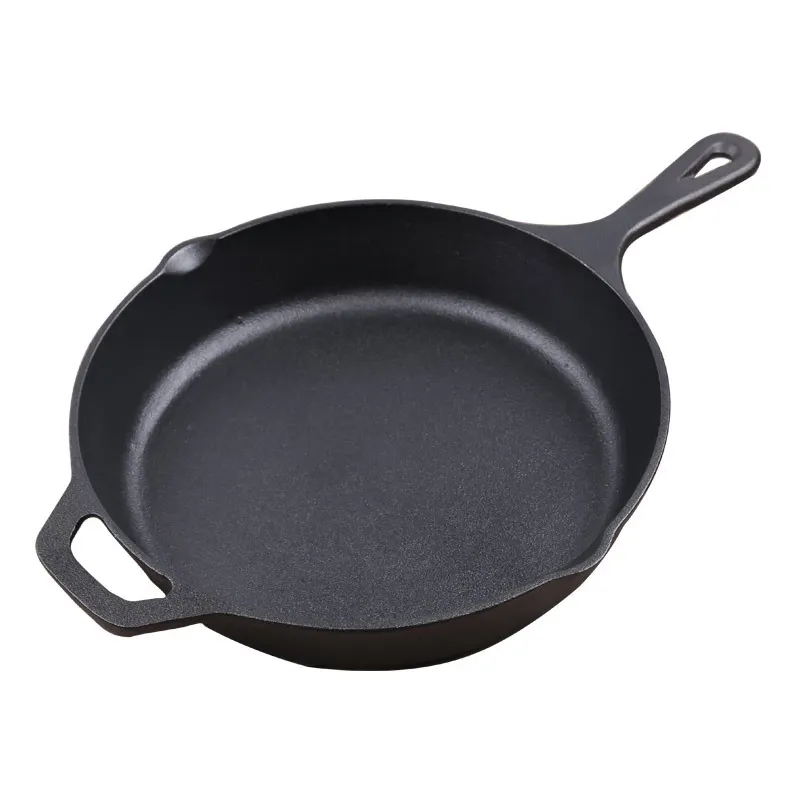

Premium Customizable Pre-seasoned Non Stick Cast Iron Frying Pan / Skillet
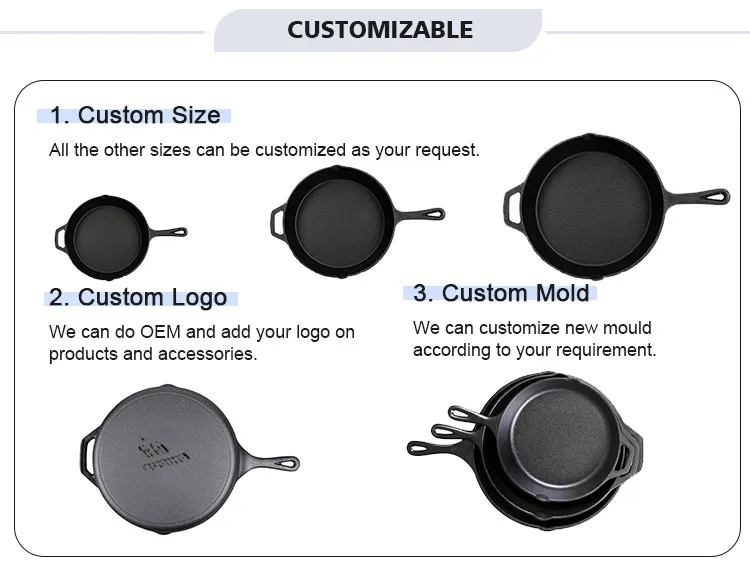
Made from cast iron, with either a cast-iron pre-seasoned coating or a cast-iron enamel coating; color and size can be customized. Packaging can also be customized. Lead time is 5 days for free samples and 20 days for bulk orders.
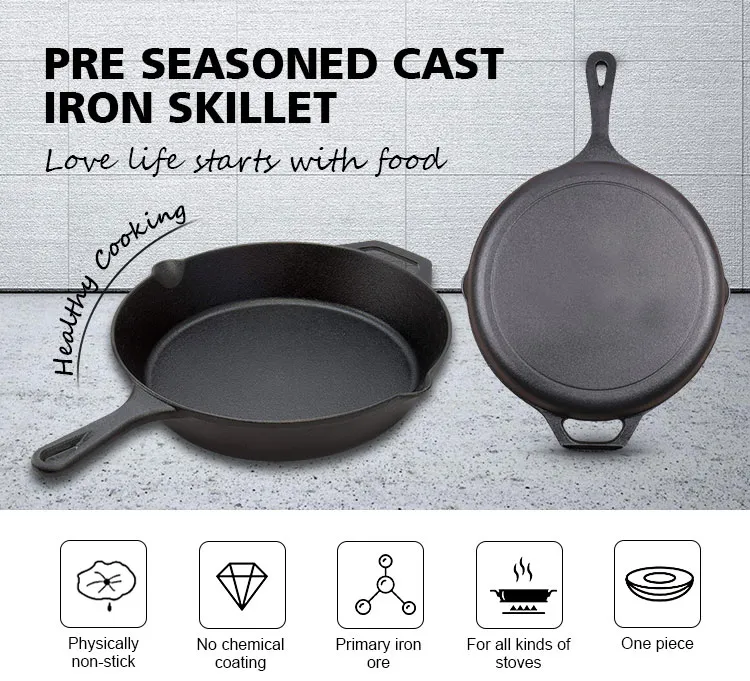
1. Non-stick cooking surface coating for healthier cooking—designed to be safe for the human body, with added environmental protection and safety.
2. Cast-iron pans develop improved non-stick performance after boiling, and the longer they are used, the better the non-stick effect becomes.
3. General-use design for gas stoves, induction cookers, open fires, and more—easy to use.
4. Thicker pan bottom for enhanced temperature locking and more even heating.
Cleaning Tips for Non-Stick Cast Iron Frying Pans Without Losing the Seasoning
Avoid soap unless absolutely necessary—instead, use coarse salt plus oil as a gentle abrasive. For stuck-on food, boil water in the pan to loosen debris, then scrape with a wooden spatula. Dry immediately over low heat to help prevent rust, and apply a micro-thin coat of oil while the pan is still warm. Never soak cast iron or use steel wool, as this removes the seasoning. For stubborn residue, a chainmail scrubber cleans effectively without damaging the polymerized layer.
From Breakfast to Dinner: Versatile Uses of a Non-Stick Cast Iron Frying Pan
This pan moves effortlessly from breakfast to dinner. Cook crispy hash browns with even heat, then sear salmon skin-side down for a perfect crisp finish. Bake Dutch babies or cornbread for golden, crunchy edges. For dinner, use it for stir-fries—its heat retention helps prevent soggy vegetables—or try reverse-seared steaks. Even desserts perform well; consider pan cookies or fruit crisps. The key is to adjust the heat level: low for eggs, medium for sautéing, and high for browning.
Why a Cast Iron Non-Stick Skillet Is Better Than Traditional Nonstick Pans
Traditional non-stick pans typically lose performance after 2–3 years, while cast iron improves with age. Its heat retention helps prevent cold spots, unlike aluminum-based Teflon-style non-stick pans. Cast iron is also suitable for all heat sources (including induction and campfires) and is oven-safe for finishing dishes. Although heavier, its durability reduces waste—when properly maintained, a skillet can last for generations. In addition, there is no flaking coating, helping to avoid hidden coating-related residues in food.