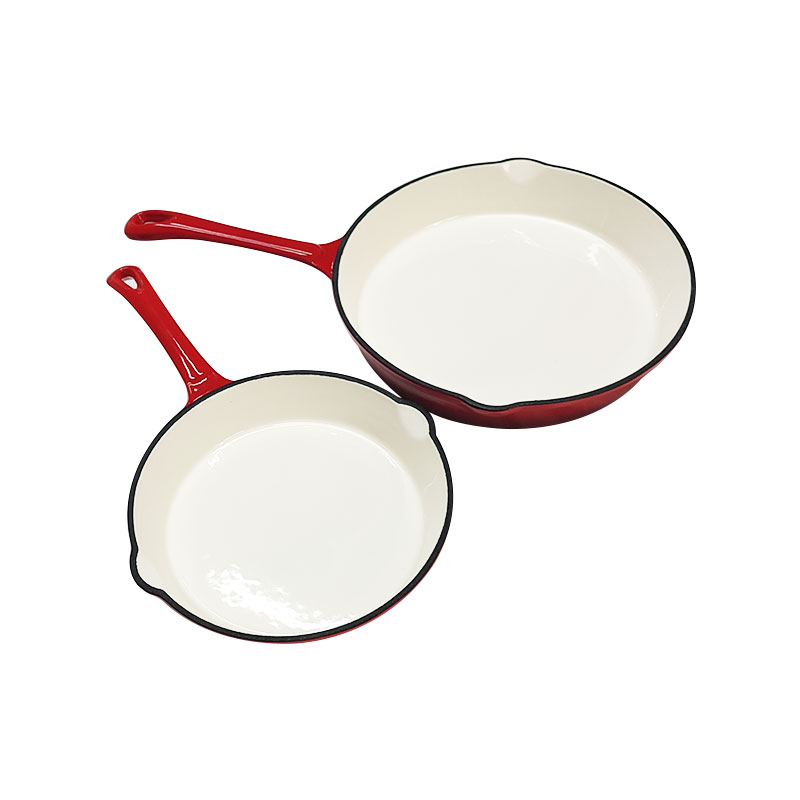

Premium Household Enamelled Cast Iron Frying Pot / Skillet With Long Handle
Available sizes: 41×25×4.4 cm (2.1 kg), 34×20×4 cm (1.25 kg), and 28.5×17×3.8 cm (0.8 kg). MOQ is 100 pieces, priced at $5.9/$3.6/$2.4 per piece; packing is in a brown box or color box, with enameled coating and customizable color. Lead time is 7 days for samples and 20 days for bulk orders.
1. Non-stick cooking surface with an even, durable finish for healthier cooking without harm to the human body, with environmental protection and safety in mind.
2. Cast-iron pans become increasingly non-stick after boiling; the longer they are used, the better the non-stick performance.
3. Suitable for general use with gas stoves, induction cookers, open flames, and more—easy to use.
4. Thicker pan bottom for improved heat control, temperature stability, and even heating.
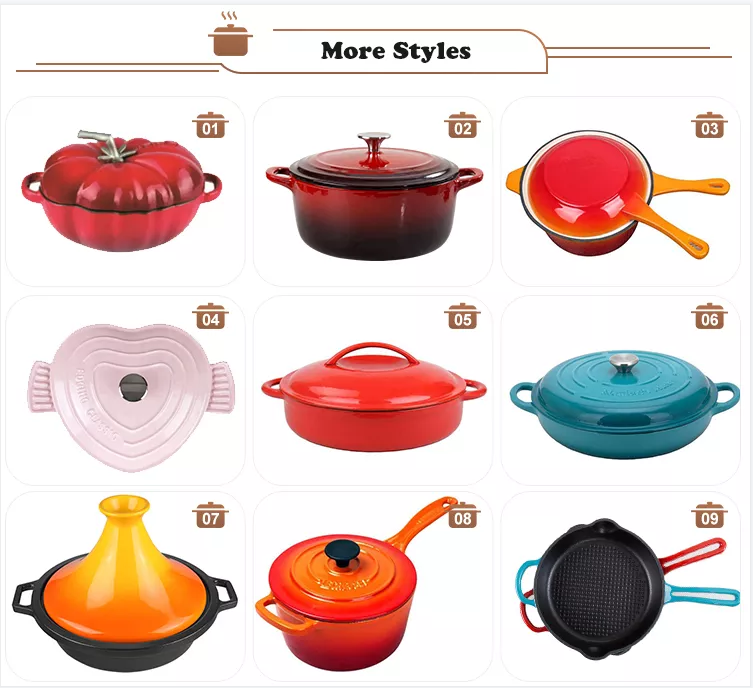
Benefits of Enameled Cast Iron Long-Handle Pans Compared to Traditional Skillets
Enameled cast iron long-handle pans offer several advantages over traditional skillets. Unlike raw cast iron, which requires regular seasoning to prevent rust, the enamel coating provides a maintenance-free, non-porous surface that helps resist sticking and corrosion. This makes it especially user-friendly for cooks who are new to cast iron.
Compared with stainless steel or nonstick pans, enameled cast iron retains heat significantly better, helping to ensure even cooking without cold spots. The long-handle design improves balance and control, making it easier to turn food or move the pan in and out of the oven. In addition, unlike nonstick coatings that may wear over time, high-quality enamel is highly durable and is designed for safe long-term use at high temperatures. This makes it a practical and sustainable choice for everyday cooking.
How to Bake Perfect Dishes Using an Enameled Cast Iron Long-Handle Pan
Baking with an enameled cast iron long-handle pan is easy when you use a few key techniques for the best results. First, preheat the pan before adding ingredients to support even heat distribution—this is especially important for dishes such as cornbread or Dutch babies. For roasting, begin with a high-heat sear on the stovetop to help lock in juices, then transfer to the oven.
When baking bread, the pan’s heat retention helps produce a crisp crust while keeping the interior moist. Avoid sudden temperature changes (for example, placing a cold pan into a hot oven) to reduce the risk of enamel cracking. Lightly grease the pan before use to promote easy release, and use oven mitts, since the long handle can heat up quickly. With proper care, this pan can deliver consistently great baked results with minimal effort.