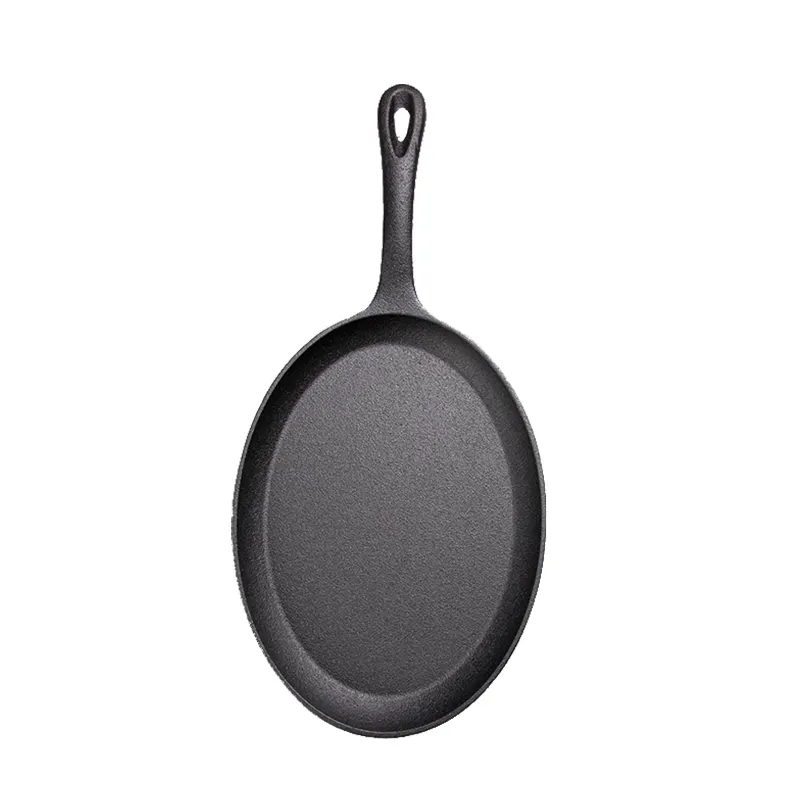

Premium Pre-Seasoned Skillet Oval Cast Iron Outdoor BBQ Steak Pan
Made of cast iron, with a choice of cast iron pre-seasoned coating or cast iron enamel coating; color and size can be customized. Packaging is available in customized options. Sample lead time is 5 days (free), with bulk production taking 20 days.
Cookware Type: Non-stick
Pot Cover Type: Without pot cover
Diameter: Custom
Design Style: Traditional, Industrial, Casual, Modern, Modern Luxury
Pans Type:
Fajita pans
Metal Type: Cast iron
Product Name: Cast iron sizzling pan
Material: Cast iron
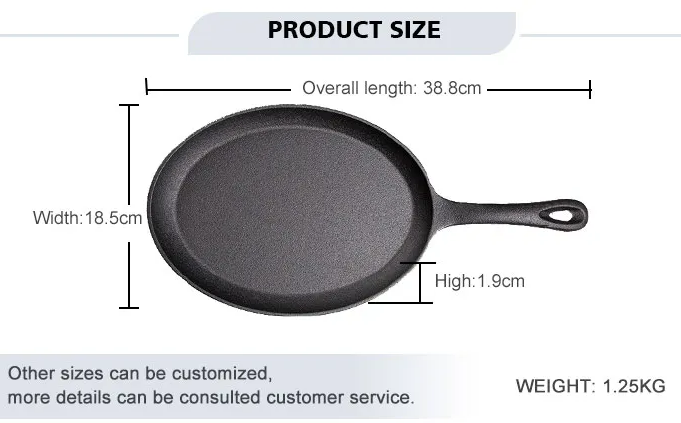
Size: 38.8*18.5*1.9 cm or custom
Shape: Oval
Logo: Accepts customized logo
Advantage: Durable, healthy
Season: All-season
Why Oval Cast Iron BBQ Pans Are Perfect for Outdoor Steak Grilling
The oval shape of a cast iron BBQ pan is specifically designed to accommodate long cuts of meat such as ribeye, T-bone, or flank steak with ease. Unlike round pans that force you to curl or trim steaks, the elongated cooking surface provides ample room for full-sized cuts to lie flat, supporting even searing. Cast iron offers excellent heat retention, helping you achieve a rich crust while locking in juices. Its deep walls also help prevent grease splatter when cooking over open flames, making it ideal for outdoor grilling where flare-ups are common. Whether you use charcoal, wood fire, or a portable gas stove, this pan delivers restaurant-quality results every time.
Oval vs Round Cast Iron BBQ Pans: Which Is Better for Steak?
Both shapes perform well, but oval cast iron pans offer clear advantages for steak enthusiasts. Their elongated design fits full-length cuts without crowding, helping to prevent uneven cooking caused by overlapping meat. The additional surface area also supports better airflow around the steak when grilling over open flames, promoting a more consistent sear. While round pans are versatile, they often require trimming larger steaks or cooking in batches. For dedicated steak grilling—especially with bone-in cuts—the oval pan’s shape closely matches professional grill surfaces, making it the superior choice for achieving the ideal crust and doneness.
How to Grill the Perfect Steak on an Oval Cast Iron Pan Over Open Fire
Start by preheating your oval cast iron pan over hot coals or flames until it is smoking hot—this helps ensure a proper sear. Pat your steak dry, season generously, and lay it flat in the pan, leaving space between pieces. Avoid moving the steak too soon; let it develop a deep crust for approximately 2–3 minutes per side for medium-rare. Use tongs to sear the edges for rendered fat and enhanced flavor. For thicker cuts, move the pan to a cooler area of the fire to finish cooking indirectly. Cast iron’s even heating helps eliminate hot and cold spots, while the oval shape accommodates longer cuts without overcrowding.