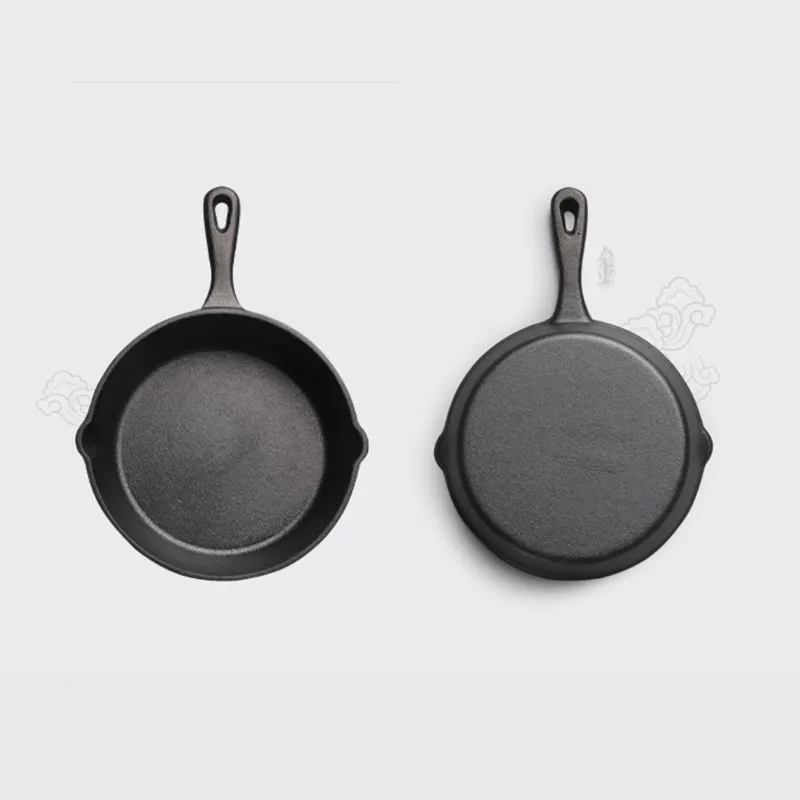

Wholesale Pre-seasoned Cookware Custom Logo Non-stick Cast Iron Frying Pans Skillet With Handle
Made from cast iron with a cast iron pre-seasoned coating in black. Available in size 23*12.85*2.5/34.4*20.5*4.2 and weighing 0.5 kg/1.35 kg, supplied in brown box/color box with a supply capacity of 300,000 pieces per year. Origin: Hebei, China; packing port: Tianjin Xingang; sample lead time 5 days (free), bulk lead time 20 days.
Feature
1. Cast Iron Skillet. This cast iron skillet delivers heavy-duty performance with lower sidewalls and a wider cooking surface. Ideal for use on stoves or in ovens.
2. Seasoned Cookware. Proper seasoning makes all the difference. The more you use the pan, the better the seasoning develops.
3. Superior Temperature Regulation. Uniform heat distribution helps maintain steady cooking temperatures.
4. Use Immediately After Washing. Compatible with all cooking surfaces, grills, and campfires. Hand wash only.
Application:
Cast-iron skillets are suitable for sautéing, pan-frying, searing, baking, braising, broiling, roasting, and other cooking methods.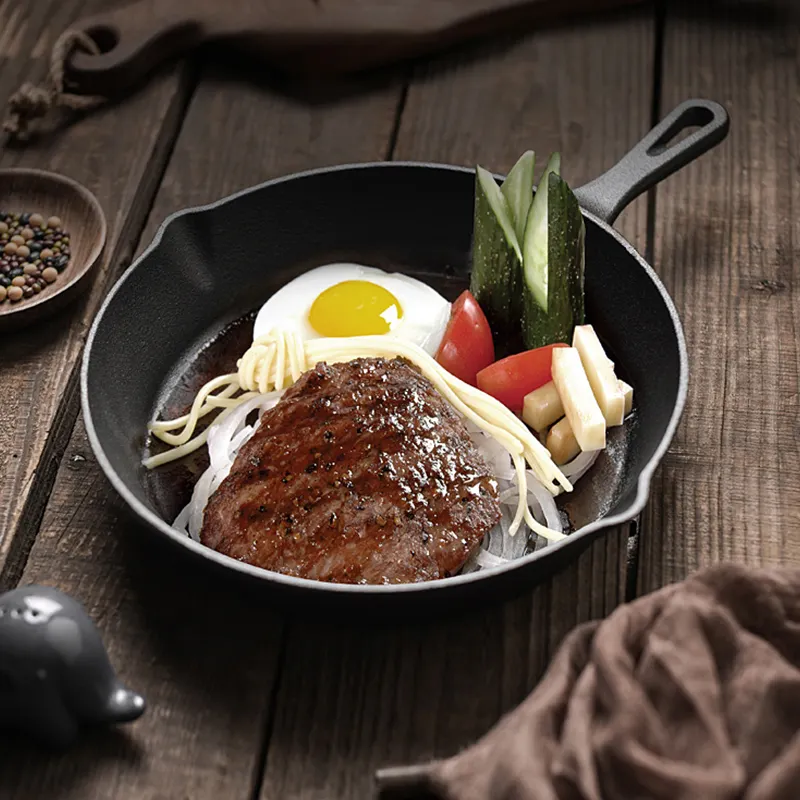
Can You Use a Cast Iron Frying Pan on All Stovetops?
Yes. Cast iron frying pans are compatible with all stovetops, including gas, electric, induction, and even open flames. On induction cooktops, the pan’s ferrous material heats efficiently when placed directly on the burner. For glass-top electric stoves, lift the pan instead of sliding it to avoid scratching. The main drawback is weight—cast iron is heavier than many other materials, which may be less convenient for some users. Regardless of your heat source, this pan’s versatility makes it a reliable kitchen essential.
How to Clean a Cast Iron Frying Pan Without Damaging It
To protect the seasoning, clean cast iron using a gentle method. While the pan is still warm, remove food residue with a brush or sponge and hot water—avoid soap unless absolutely necessary. For stubborn deposits, use coarse salt as a natural abrasive. Do not soak the pan or use harsh detergents, as this can cause rust. After washing, dry it immediately with a towel and place it on a warm burner to evaporate any remaining moisture. A light final oiling helps keep the surface protected. With this routine, your pan will remain in excellent condition for years.
Pre-Seasoned Surface: Natural Non-Stick and Easy Maintenance
Modern pre-seasoning techniques create an optimized base layer that performs better than traditional DIY seasoning. Factory-applied flaxseed or grapeseed oil undergoes high-temperature polymerization to form a durable, semi-permanent coating that is more non-stick than unseasoned iron (reference: 60% more non-stick). This surface improves with use—each cooking session deposits additional lipid layers that enhance natural release performance. Unlike some synthetic non-stick coatings that wear down over time, proper care helps the seasoning keep improving. The seasoning also acts as a protective barrier, helping prevent acidic ingredients, such as tomatoes, from reacting with bare iron. With minimal maintenance (avoid aggressive soap scouring and always dry thoroughly), the surface develops a glossy black patina similar to that of professional kitchen equipment.