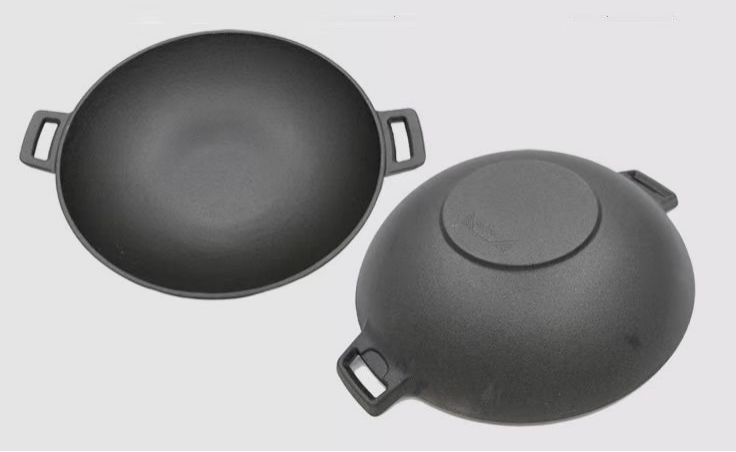

Premium Customizable Pre-seasoned Cast Iron Cooking Pot Wok With Two Ears
Cast iron product available with a cast iron pre-seasoned coating or cast iron enamel coating; color and size can be customized. Packaging can also be customized. Sample lead time is 5 days (free); bulk orders take 20 days.
- Product name: Cast iron wok
- Applicable stoves: General use for gas and induction cookers
- Wok type: Non-stick
- Pot cover type: Without pot cover
- Feature: Sustainable
-
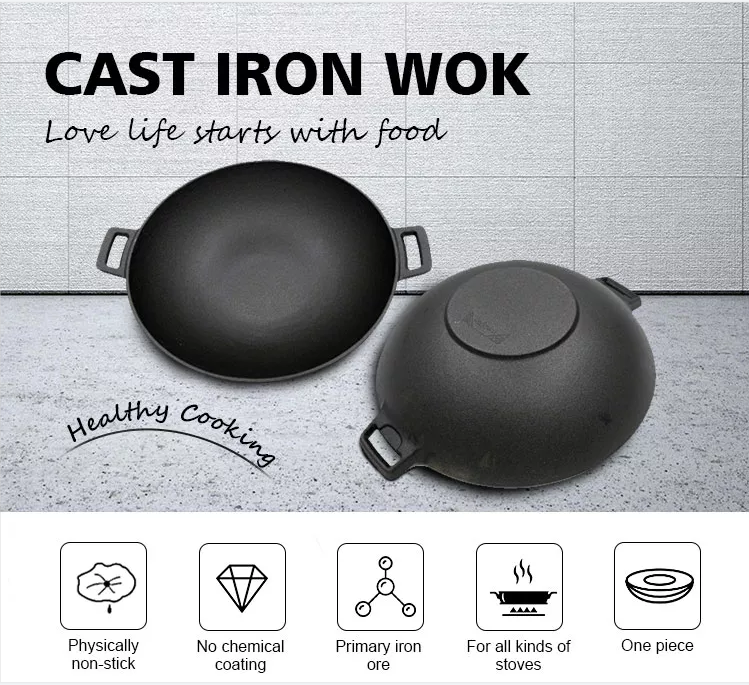
Durability and Heat Retention: Why Cast Iron Woks with Two Ears Are Kitchen Essentials
A cast iron wok with two ears is a true kitchen workhorse—built to last for generations while delivering excellent cooking performance. Unlike thin carbon steel or non-stick woks that may warp or wear over time, cast iron’s robust construction withstands high heat and frequent use without compromising its structure. Its superior heat retention helps ingredients cook evenly, locking in flavor and creating the ideal sear on meats and vegetables. The two-ear design provides stability whether you are cooking on a gas flame, induction stove, or open fire, making it highly versatile for different cooking setups. Although it is heavier than other woks, its durability and ability to maintain consistent temperatures make it an essential choice for stir-frying, deep-frying, and even slow braising.
Benefits of Two-Ear Handles: Safer, Easier Handling of Heavy Cast Iron Woks
The dual-ear design on cast iron woks is not only traditional—it is also a practical solution for managing both weight and heat. Unlike long handles that can feel less stable with heavier loads, the two short, looped ears provide balanced support, enabling a secure grip when using a wok spatula or towel. This design also helps keep your hands farther from the heat source, reducing the risk of burns when tossing ingredients at high temperatures. When lifting, draining, or transferring food, the ears offer improved control. For additional stability during cooking, many users place a wooden or metal wok ring under the base. Overall, the two-ear configuration demonstrates how thoughtful design can make even heavyweight cast iron woks safer and easier to use.
Even Heat Distribution: Achieve Consistent Stir-Fry Results with Cast Iron
Cast iron’s excellent heat distribution helps turn stir-frying into a reliable, repeatable process. Compared with thinner materials that tend to create hot spots, cast iron absorbs and radiates heat evenly across the cooking surface, supporting uniform results without scorching. This consistent heating is essential for wok hei (the “breath of the wok”)—the smoky, charred flavor that defines a great stir-fry. While cast iron takes longer to heat up, it holds temperature steadily, helping prevent the cooling effect that can occur when adding cold ingredients to lighter cookware. With proper seasoning, the surface develops naturally non-stick performance, making it a good option for delicate items such as eggs or sticky rice. Although it is heavier than carbon steel, cast iron’s thermal mass makes it a preferred choice for chefs and home cooks who prioritize control and flavor over quick maneuverability.