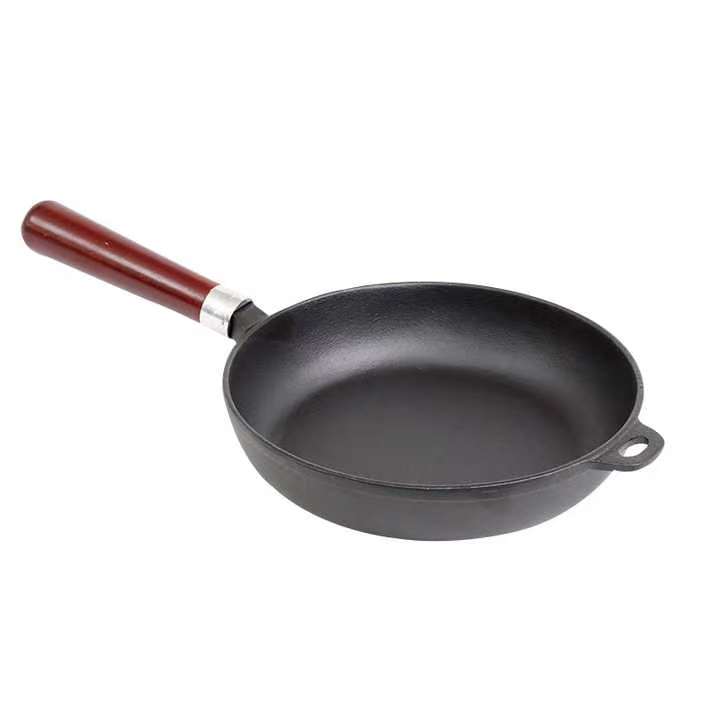

Pre-Seasoned Cast Iron Round Skillet Fry Pan With Wooden Handle
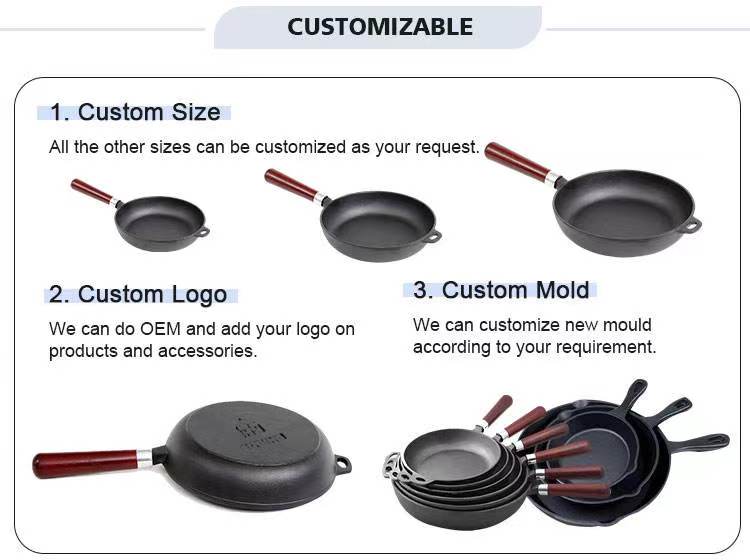
Cast iron cookware is available with a pre-seasoned cast-iron coating or a cast-iron enamel coating, with customizable colors and sizes. Packaging can also be customized. Sample lead time is 5 days (free), with bulk orders delivered in 20 days.
1. Non-stick cooking surface: supports healthier cooking without harm to the human body; contributes to environmental protection and safety.
2. Cast-iron cookware: non-stick performance improves with use after boiling— the longer it is used, the more non-stick it becomes.
3. General-purpose use for gas stoves, induction cookers, and open-fire cooking—easy to use.
4. Thickened pan base: locks in temperature for even heating.
FAQ
1. Who are we?
We are based in Hebei, China, and have been in business since 2010. We sell to Western Europe (25.00%), North America (25.00%), Northern Europe (10.00%), Eastern Europe (10.00%), Eastern Asia (10.00%), the Middle East (10.00%), and Southeast Asia (10.00%).
2. How can we guarantee quality?
Always provide a pre-production sample before mass production;
Always perform a final inspection before shipment.
3. What can you buy from us?
Cast iron cookware, cast iron skillets, cast iron casseroles, cast iron griddles, frying pans.
4. What services can we provide?
Accepted Delivery Terms: FOB, CIF, EXW, CIP;
Accepted Payment Currency: USD;
Accepted Payment Types: T/T, L/C.
Why Choose a Cast Iron Round Skillet with Wooden Handle for Everyday Cooking?
A cast iron skillet with a wooden handle combines durability with everyday practicality. Its round design supports even heat distribution, making it ideal for searing, frying, and baking. Unlike synthetic handles, wood stays cooler to the touch during stovetop cooking, reducing the need for oven mitts. The natural wood grain also adds a warm, rustic look that complements modern kitchen design. For small kitchens, the compact shape fits easily on burners or in ovens, while the weight of cast iron helps retain heat for consistent cooking. Whether you’re flipping pancakes or finishing a steak, this skillet adapts smoothly to daily tasks.
Wood vs. Metal Handles: What Makes a Wooden Handle Better for Cast Iron Pans?
Wooden handles outperform metal in heat resistance and comfort. Metal conducts heat, often requiring oven mitts even for relatively short cooking sessions, while wood naturally insulates and stays safer to grip. The ergonomic shape of a wooden handle also provides better leverage when tossing food or adjusting the pan’s position. Unlike riveted metal handles, a wooden handle is less likely to loosen over time due to thermal expansion, supporting long-term stability. In addition, wood is lighter, helping balance the skillet’s overall weight for easier handling. The trade-off: wood is not oven-safe at extremely high temperatures (typically limited to 400°F/200°C), where metal is better suited for broiling.
The Perfect Frying Experience: Benefits of a Round Cast Iron Skillet with Wooden Handle
The round shape of this skillet promotes smooth, uninterrupted food movement—ideal for stir-fries or sliding eggs onto a plate. Cast iron’s heat retention delivers steady cooking temperature, while the wooden handle allows precise control when tilting to baste or drain grease. When properly seasoned, the smooth interior surface develops a natural non-stick patina, helping reduce oil dependency. Compared with lighter, flimsier pans, this combination performs well for high-heat searing without warping. For home cooks, the wooden handle provides tactile feedback that enhances flipping techniques, from delicate crêpes to crispy hash browns.