Nov Back to list
cast iron hibachi grill Thermal Dynamics and Manufacturing Specifications
Achieving a professional sear on steaks or a perfectly charred vegetable medley often depends less on the chef's skill and more on the thermal mass of the equipment used. The challenge with traditional thin-walled pans is the immediate drop in surface temperature the moment cold proteins hit the metal, leading to steaming rather than searing.
This thermal instability is where heavy-duty cast iron becomes indispensable. By absorbing and radiating heat with high consistency, it allows for the precise temperature control required for high-heat grilling techniques. Whether used in a commercial kitchen or a home patio, the ability to maintain a steady heat flux is what defines a high-performance cooking surface.
For those exploring specialized grilling options, the cast iron hibachi grill offers a concentrated heat source that bridges the gap between traditional charcoal grilling and modern stovetop precision, making it a versatile tool for varied culinary applications.
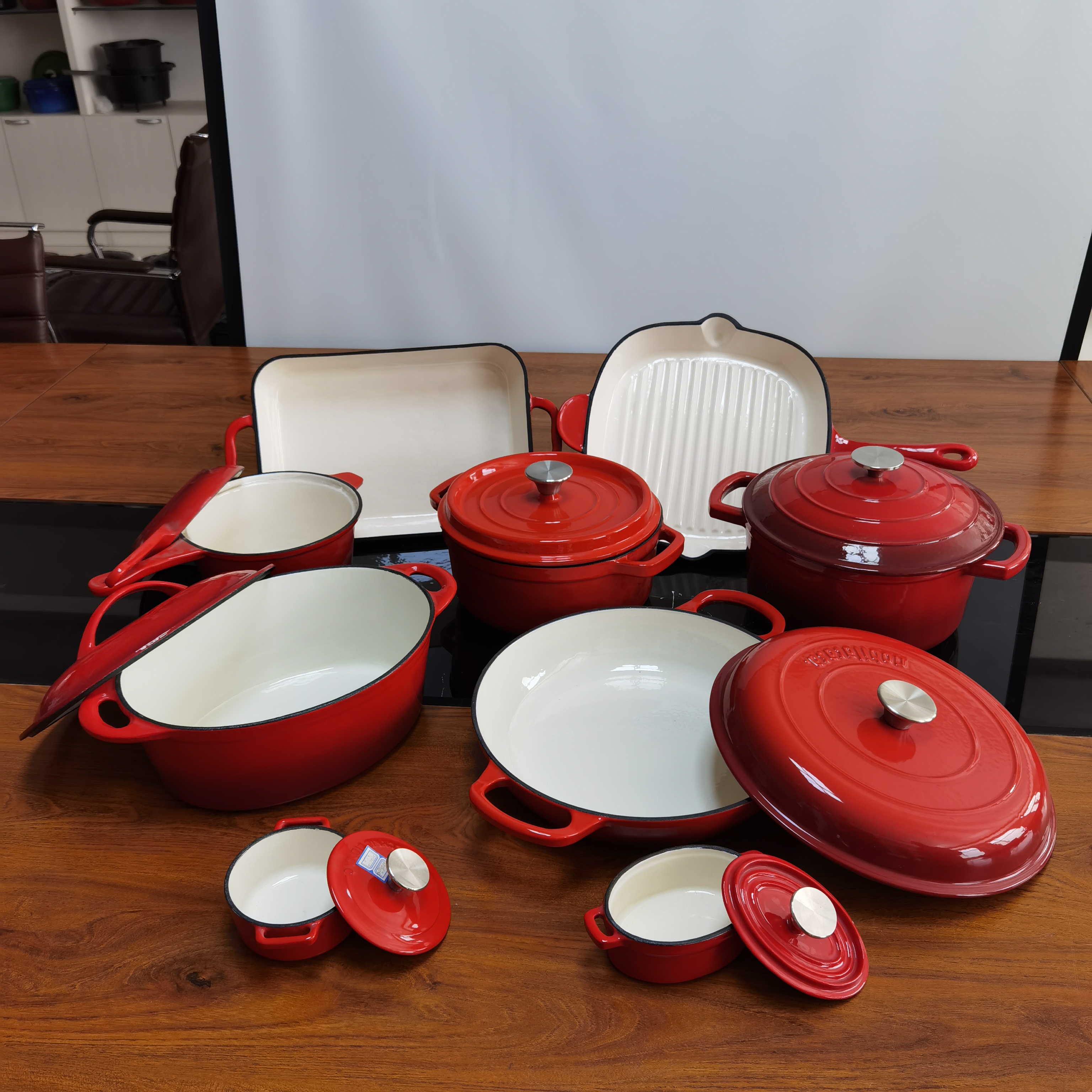
Thermal Dynamics of Cast Iron Grills

The primary advantage of cast iron lies in its high volumetric heat capacity. Unlike aluminum or stainless steel, which transfer heat quickly but lose it just as fast, cast iron acts as a thermal battery. It absorbs energy slowly but radiates it with intense stability across the entire surface.
In a hibachi configuration, this ensures that the center of the grill does not become an isolated hot spot while the edges remain cold. This uniformity is critical for "flash-searing," where the objective is to create a Maillard reaction on the exterior of the food without overcooking the interior.
Design Specifications for Heat Efficiency
Precision in cast iron manufacturing involves controlling the carbon content and the cooling rate of the molten metal. A dense grain structure prevents warping under extreme temperature fluctuations, which is a common failure point in lower-grade cookware. When designing for hibachi-style grilling, the wall thickness must be balanced; too thin and the heat is uneven, too thick and the preheating time becomes impractical for commercial use.
The geometry of the cooking surface also plays a role. Flat surfaces maximize contact for searing, while ribbed designs facilitate fat drainage and create the characteristic grill marks. Integration with a stable base is essential to ensure that heat from the charcoal or burner is channeled efficiently into the iron core without excessive loss to the surrounding environment.
Advanced production lines, such as those utilized by Hebei Debien Technology, employ automated vertical parting-type injection molding to ensure that every piece maintains consistent wall thickness. This industrial precision eliminates the anomalies found in artisanal casting, resulting in a product that behaves predictably regardless of the heat source.
Material Safety and Coating Standards
The debate between seasoned cast iron and enamel coatings centers on the balance between durability and maintenance. Traditional seasoning creates a natural polymer layer through the carbonization of fats, providing a semi-non-stick surface. However, enamel coatings offer a different set of advantages, particularly regarding chemical inertness and hygiene.
Modern high-grade enamel coatings must be mineral-based and strictly PFOA-free and lead-free to prevent metal leaching, especially when cooking acidic ingredients that can react with raw iron.
From a safety perspective, quality enamel remains stable up to 500°F (260°C), ensuring that no toxic fumes are released during high-heat operations. This makes enameled options an ideal choice for health-conscious environments where the risk of chemical exposure from degrading non-stick coatings is unacceptable.
Performance Index by Cooking Method
Different culinary techniques place varied demands on the cookware's thermal properties. Searing requires maximum heat retention to prevent temperature drops, while slow-simmering requires the ability to modulate low temperatures without fluctuations. The cast iron core's ability to radiate heat evenly makes it uniquely suited for both extremes.
When evaluating the efficiency of various cast iron tools, we look at the "Heat Stability Index"—a relative measure of how well a piece of cookware maintains its temperature under load. As shown in the illustrative model below, specialized grill pans and hibachi units typically outperform general-purpose pots in high-intensity searing tasks.
Figure 2. Relative Heat Stability Index by Product Category
Practical Deployment Scenarios
In a typical residential outdoor setting, a cast iron hibachi grill serves as a portable high-heat station, allowing users to achieve restaurant-quality searing on a balcony or patio without the need for a full-sized barbecue. The concentrated heat makes it particularly effective for thin-cut proteins like Wagyu beef or scallops, where the cooking time is measured in seconds.
For commercial catering, these units are often deployed as interactive cooking stations. The ability of the iron to withstand constant high-temperature use without warping ensures longevity in high-volume environments. When integrated into a larger set of cast iron cookware, such as combining a grill pan with a Dutch oven, the chef gains a complete spectrum of thermal control from slow braising to intense searing.
Evolution of Hibachi Engineering
The transition from traditional clay-lined hibachi to industrial cast iron represents a shift toward efficiency and hygiene. Modern engineering focuses on the "thermal bridge"—the path heat takes from the fuel source to the food. By optimizing the density of the iron and the precision of the casting, manufacturers have reduced the energy required to reach searing temperatures.
Current industry trends are leaning toward hybrid solutions. We are seeing an increase in the use of specialized enamel that can withstand the abrasive nature of metal spatulas while maintaining the heat-retention properties of the iron core. This removes the maintenance burden of traditional seasoning without sacrificing performance.
Looking forward, the integration of automated inspection equipment, such as BRUKER spectrometers, allows manufacturers to ensure that the chemical composition of the iron is exact. This consistency is what allows global brands to maintain quality standards across millions of units, moving the industry away from the variability of manual casting.
Selection Framework for Professional Users
Selecting the right cast iron tool requires an analysis of the intended use case versus the material properties. A user focusing on high-acidity sauces should prioritize enamel-coated options to avoid metallic flavor transfer. Conversely, those seeking the absolute highest temperatures for charring should opt for raw, seasoned cast iron.
Weight is another critical trade-off. While heavier pans offer better heat retention, they are less maneuverable. Professional-grade equipment often finds a "sweet spot" in thickness that ensures thermal stability without becoming an ergonomic liability in a fast-paced kitchen.
The following evaluation framework provides a relative assessment of different cast iron configurations based on typical operational requirements.
| Application | Raw Seasoned | Enamel Coated | Selection Priority |
|---|---|---|---|
| High-Heat Searing | Optimal | Very Good | Thermal Mass |
| Acidic Braising | Poor | Optimal | Chemical Inertness |
| Outdoor Portability | Good | Fair | Weight/Durability |
| Daily Maintenance | High Effort | Low Effort | Surface Porosity |
| Temperature Control | Excellent | Very Good | Heat Distribution |
| Long-term Longevity | Lifelong | High (if careful) | Material Stability |
Questions & Answers
The primary difference lies in the heat concentration and the intended fuel source. A hibachi grill is typically designed to sit atop a concentrated heat source (like charcoal or a specific burner), creating a localized, high-intensity heat zone. A standard grill pan is generally designed for stovetop use across a wider surface area. The hibachi design prioritizes maximum thermal density for rapid searing of small portions, whereas grill pans are more versatile for larger batches of food.
Enamel does not significantly hinder the heat retention of the cast iron core, but it does change the surface interaction. While raw cast iron can reach slightly higher surface temperatures, high-quality enamel allows for a more consistent heat distribution by moderating extreme temperature spikes. The trade-off is that enamel cannot be "re-seasoned" like raw iron, but it provides a non-porous barrier that is more hygienic and resistant to food odors.
When purchasing enamel-coated cast iron, verify that the manufacturer specifies the coating as PFOA-free and lead-free. Mineral-based coatings are the industry standard for safety. For raw cast iron, ensure the initial seasoning is done with food-grade oils. Certifications such as FDA or LFGB are strong indicators that the product has undergone rigorous testing for food contact safety and does not leach harmful chemicals into the food at high temperatures.
It depends on the goal. Aluminum is superior for rapid heating and cooling (responsiveness). However, for searing, cast iron is far superior because its mass prevents the surface temperature from crashing when cold food is added. If you are cooking delicate items that require precise timing, aluminum is fine. For professional-level crusts and consistent heat across the surface, the thermal mass of cast iron is an irreplaceable technical advantage.
Warping is usually caused by "thermal shock"—rapidly changing the temperature of the metal. To prevent this, avoid placing a screaming-hot grill directly into cold water. Instead, allow the iron to cool naturally or use lukewarm water for cleaning. Additionally, ensure the grill is cast with a consistent wall thickness; precision-manufactured pieces from automated lines are significantly less prone to warping than hand-cast pieces with uneven thickness.
Yes, one of the greatest advantages of cast iron is its versatility. Since the material is inherently oven-safe, you can start a dish on the grill for a high-heat sear and then transfer the entire unit (if the design allows) into the oven to finish cooking the interior. This transition is ideal for thicker cuts of meat or seafood that require both a charred exterior and a precise internal temperature.
Final Thoughts
The efficacy of a cast iron hibachi grill is rooted in the fundamental physics of heat retention. By prioritizing material density and precision casting, these tools provide a level of thermal stability that is unattainable with thinner metals. Whether choosing the rugged durability of seasoned iron or the hygienic precision of enamel, the goal remains the same: maintaining a consistent energy flux to ensure professional results.
As manufacturing technology continues to integrate more automation and stricter chemical safety standards, the gap between professional kitchen equipment and home cookware continues to close. Investing in high-mass, precision-engineered cast iron is not just about buying a pan, but about acquiring a tool that fundamentally changes the thermodynamics of the cooking process.
- cast iron hibachi grill Thermal Dynamics and Manufacturing Specifications
- Cast Iron Skillet Manufacturers Manufacturing Performance Analysis
- cast iron casserole dish thermal performance analysis
- Cast Iron Skillet Thermal Physics and Manufacturing Specifications
- Cast Iron Cookware Manufacturer Thermal Dynamics and Manufacturing Specifications