Nov Back to list
cast iron grill pan thermal dynamics and performance analysis
Achieving the perfect sear on a steak or the characteristic charred lines on grilled vegetables often comes down to a single variable: heat retention. While many modern pans promise speed, the physics of professional grilling require a material that can withstand high temperatures without fluctuating.
The shift toward home-based gourmet cooking has renewed interest in traditional materials, specifically cast iron. Unlike thin aluminum or coated stainless steel, the dense molecular structure of cast iron provides a thermal mass that prevents the surface temperature from dropping when cold food is added.
Whether you are upgrading your kitchen toolkit or sourcing for a commercial venture, understanding the technical nuances of a cast iron grill pan is essential for consistent culinary results.
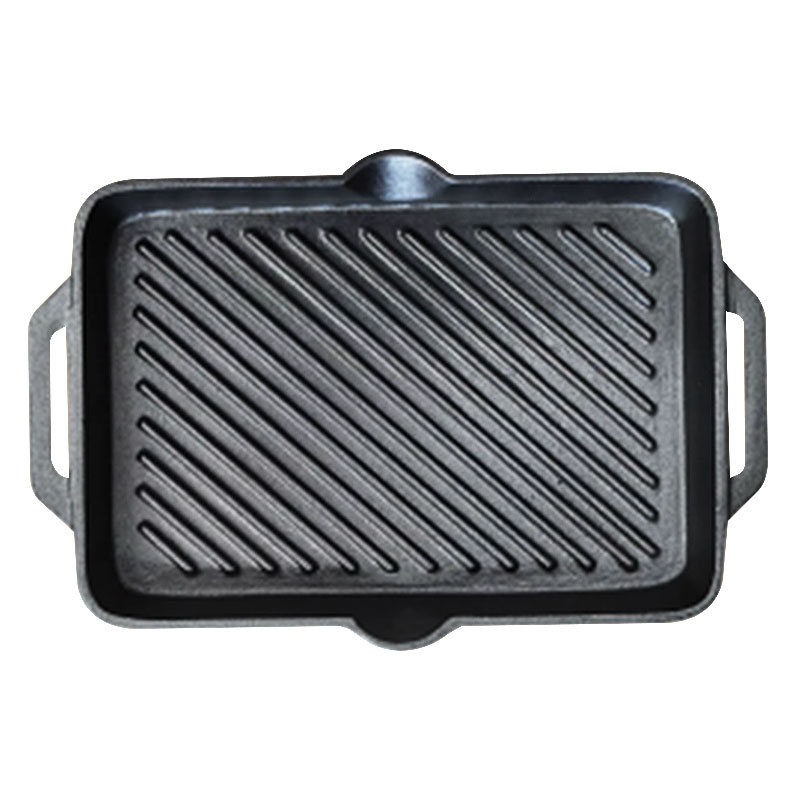
Thermal Dynamics of Cast Iron

Cast iron is prized in the metallurgical world for its exceptional heat capacity. Unlike copper or aluminum, which conduct heat rapidly but lose it just as quickly, cast iron absorbs a significant amount of energy and releases it slowly and evenly across the cooking surface.
This property is critical for grill pans, where the raised ribs must maintain a high temperature to create Maillard reaction browning without overcooking the interior of the food. The result is a professional-grade char that is nearly impossible to replicate with thinner materials.
Engineering the Non-Stick Surface
A common misconception is that cast iron is inherently difficult to maintain. However, the engineering of the surface is where the value lies. Modern production often employs a seasoning process—essentially a polymerization of oils—that creates a natural non-stick barrier. This layer is not a chemical coating but a structural change in the oil that bonds to the iron.
Interestingly, the non-stick properties of these pans improve with use. As more layers of polymerized oil build up, the surface becomes smoother and more hydrophobic. This makes the pan increasingly efficient over time, reducing the need for excessive fats during the cooking process.
For those seeking environmental safety, this natural polymerization is a superior alternative to synthetic PTFE coatings, ensuring that no harmful chemicals are released even when the pan is heated to extreme temperatures.
Material thickness and Temperature Control
The effectiveness of a grill pan is directly proportional to the thickness of its base. A thin base leads to "hot spots," where the areas directly above the flame are scorched while the edges remain cool. This imbalance ruins the consistency of the sear.
Increasing the bottom thickness of the pan acts as a thermal battery, locking in temperature and ensuring that heat is distributed evenly across the entire surface, regardless of the heat source.
By utilizing advanced casting techniques, manufacturers can ensure a thickened base that stabilizes the cooking environment. This is particularly vital when transitioning between different heat sources, such as moving from a gas range to an induction cooker, where energy delivery differs significantly.
Performance Index Across Heat Sources
Versatility is a key requirement for modern cookware. A high-quality cast iron grill pan must perform consistently whether it is placed over an open wood fire, a gas burner, or a magnetic induction hob. The ferromagnetic properties of cast iron make it naturally compatible with induction, providing efficient energy transfer.
When evaluating performance, the primary metric is the stability of the temperature during the "drop phase"—the moment raw protein hits the hot metal. The following index illustrates the relative heat stability of different materials in this scenario.
Figure 2. Heat Stability Index by Material
Practical Application Scenarios
In a professional kitchen or a high-end home setting, the cast iron grill pan is used for more than just steaks. It is an ideal tool for searing scallops, grilling halloumi, or preparing charred asparagus. The ability to transfer the pan directly from the stove to the oven allows for a "sear-and-roast" technique, which is essential for thicker cuts of meat that require indirect heat to reach the desired internal temperature.
For outdoor enthusiasts, the durability of cast iron makes it the only logical choice for camping. Its ability to function over an open fire without warping ensures that the cooking surface remains flat, providing a reliable experience regardless of the environment.
Evolution of Cast Iron Design
Historically, cast iron was purely functional, often heavy and rough-textured. However, the industry has evolved toward precision engineering. Modern facilities, such as those operated by Hebei Debien Technology, utilize automated casting lines and CNC machining to reduce unnecessary weight while maintaining structural integrity.
Current design trends focus on "user-centric" ergonomics. This includes the integration of better grease management systems and more balanced handle designs that reduce wrist strain. The goal is to maintain the timeless benefits of the material while removing the traditional inconveniences.
Furthermore, the introduction of enameled options has expanded the utility of cast iron, allowing for the use of acidic ingredients (like tomato sauces) without damaging the surface, though pure seasoned cast iron remains the gold standard for high-heat grilling.
Selection Framework for Buyers
When choosing a grill pan, buyers often mistake weight for quality. While cast iron is naturally heavy, the critical factor is the uniformity of that weight. A pan with inconsistent wall thickness will warp under high heat, leading to uneven cooking.
The evaluation should also consider the surface treatment. Pre-seasoned pans offer immediate utility, but the quality of the seasoning—whether it is vegetable oil or a synthetic blend—affects the longevity and safety of the product.
The following table provides a relative comparison of selection factors for different user profiles, helping to determine which specifications are most relevant to their specific cooking habits.
| User Profile | Primary Requirement | Critical Spec | Recommended Feature |
|---|---|---|---|
| Home Gourmet | Consistency | Bottom Thickness | Pre-seasoned surface |
| Professional Chef | Durability | Material Purity | High-thermal mass base |
| Outdoor/Camping | Versatility | Heat Compatibility | Open-fire resistance |
| Health Conscious | Safety | Coating Type | Natural oil polymerization |
| Induction User | Efficiency | Flatness of Base | Magnetic iron composition |
| Batch Cooker | Surface Area | Pan Diameter | Reinforced side walls |
Questions & Answers
The primary advantage is thermal mass. Cast iron retains heat far more effectively than aluminum, meaning the temperature doesn't drop when you add meat. This is essential for creating a proper sear. Additionally, seasoned cast iron is chemically safer at high temperatures compared to PTFE or PFOA coatings found in many aluminum pans, which can degrade and release fumes when overheated.
Yes, cast iron is naturally ferromagnetic, making it highly compatible with induction cooktops. However, it is important to ensure the pan has a flat bottom to maximize the contact area with the induction surface, which improves energy efficiency and ensures an even heat distribution across the grilling ribs.
The key is to avoid using harsh detergents and soaking the pan in water. After cleaning with mild soap and warm water, dry the pan immediately and apply a very thin layer of cooking oil while it is still warm. This maintains the polymerized layer. The more you use the pan for high-heat cooking, the stronger and more non-stick this natural layer becomes.
Not necessarily. While a certain amount of weight is required for heat retention, excessive weight without a purpose can be a sign of poor casting. The focus should be on the distribution of the material—specifically a thickened bottom and consistent wall thickness—rather than the total weight of the piece.
Warping usually occurs due to "thermal shock," which happens when a very hot pan is placed under cold water. This causes the metal to contract too rapidly. To prevent this, always let your cast iron cool down naturally or use warm water for cleaning. Quality casting with consistent density also significantly reduces the risk of warping.
On the contrary, a well-seasoned cast iron pan often enhances the flavor. The polymerization of oils creates a surface that helps food release and adds a subtle depth to the sear. Because there are no synthetic chemicals, the natural flavors of the ingredients are preserved and intensified by the high-heat environment.
Final Thoughts
Selecting a cast iron grill pan is an investment in culinary precision. By prioritizing material thickness and the quality of the seasoning process, users can achieve professional-grade results that are sustainable and healthy. The transition from traditional heavy casting to precision-engineered cookware ensures that these tools remain relevant in the modern, induction-heavy kitchen.
Ultimately, the value of cast iron lies in its longevity. Unlike disposable non-stick pans, a well-maintained grill pan becomes a lifelong asset, improving in performance with every meal prepared.
- cast iron grill pan thermal dynamics and performance analysis
- cast iron hibachi grill Thermal Dynamics and Manufacturing Specifications
- Cast Iron Skillet Manufacturers Manufacturing Performance Analysis
- cast iron casserole dish thermal performance analysis
- Cast Iron Skillet Thermal Physics and Manufacturing Specifications